Savanna
An illustrated history, breed standard and husbandry guide for Zimbabwean breeders
Origin and history
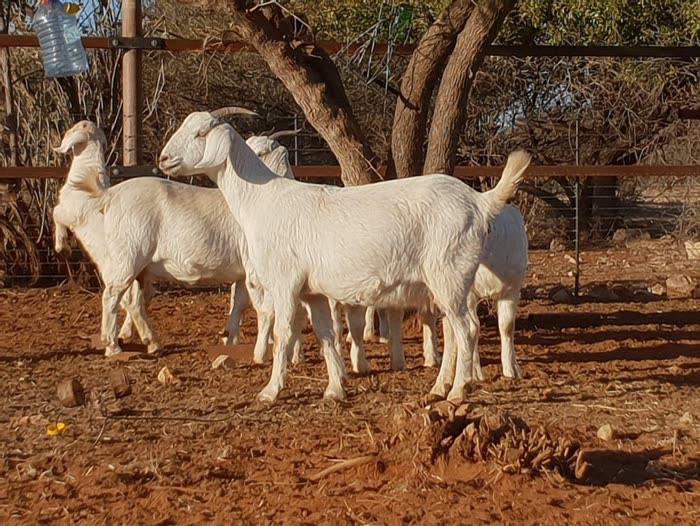
The Savanna is a white meat goat with black skin, and it was bred by letting the veld do the selecting. The Boer Goat Journal 2025 traces it to the late 1950s and early 1960s, when breeders set out to make a white meat goat that would be adaptable, fertile and resistant to the hardships of the bush. The founding work was done by the Cilliers family: from 1955 to 1957, on the farm of D S U Cilliers and Sons on the Vaal River in the northern Cape, multicoloured lop-eared indigenous does were mated to a large white buck, and the offspring were run as free-ranging flocks in a harsh environment of extreme temperatures and erratic rainfall, with little care, so that only the hardy, mobile and fertile animals survived to breed.
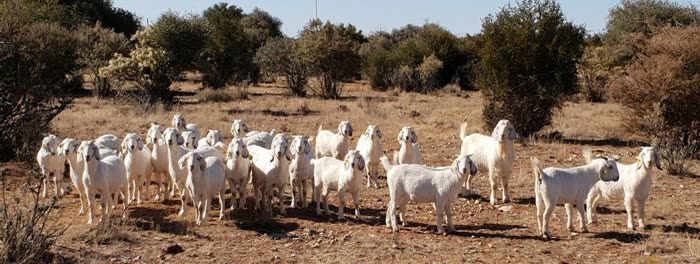
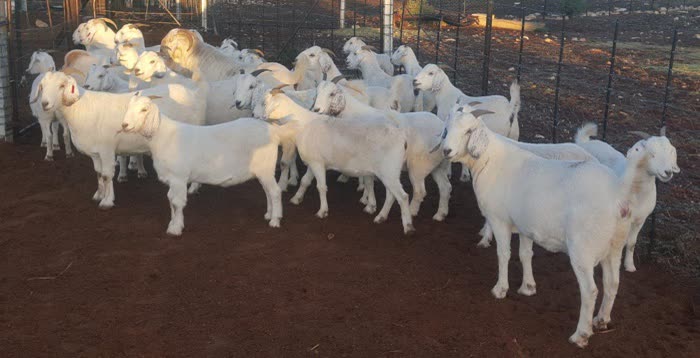
The result is a goat whose standard reads like a job description. It must endure heat, intense sun, cold and rain; walk far for feed and water; browse a wide range of vegetation, including hard, unpalatable shrubs; and be sexually active throughout the year. White was chosen for visibility in the bush and black skin for protection from the sun, and the combination, a white coat on fully pigmented skin with black hooves, horns, muzzle and eyelids, became the mark of the breed.
A breeders' society was formed on 21 November 1993, and the Savanna later joined the Boer Goat and Kalahari Red under the collaboration agreement of 2005, so that its standard was taken up with the Boer standard of excellence. The journal describes the Savanna as the white powerhouse of the meat goat industry and notes that the breed, after a period of decline, has enjoyed a surge in numbers with record entries at the 2025 World Show. The breed is now kept in the United States (from 1994), Australia, Canada, Brazil and elsewhere, and a Savanna doe set a South African record of R85,000 at auction.
The FAO lists the Savanna's status as at risk because its population is small compared with the Boer, which makes every registered flock, including those in Zimbabwe, part of its conservation.
Arrival and role in Zimbabwe
The Savanna is the least numerous of the three improved meat breeds in Zimbabwe, and quality breeding stock is harder to find than Boer or Kalahari Red. GBAZ drafted a Savanna standard at its first Goat Indaba in 2019, alongside the Boer and Kalahari Red standards, so that the breed could be inspected and registered from the start. A small number of GBAZ member studs keep Savannas, and the breed has been judged in its own class at the Bulawayo Agricultural Show, where the Savanna buck class was won by Eland Zakithi Stud in 2026.
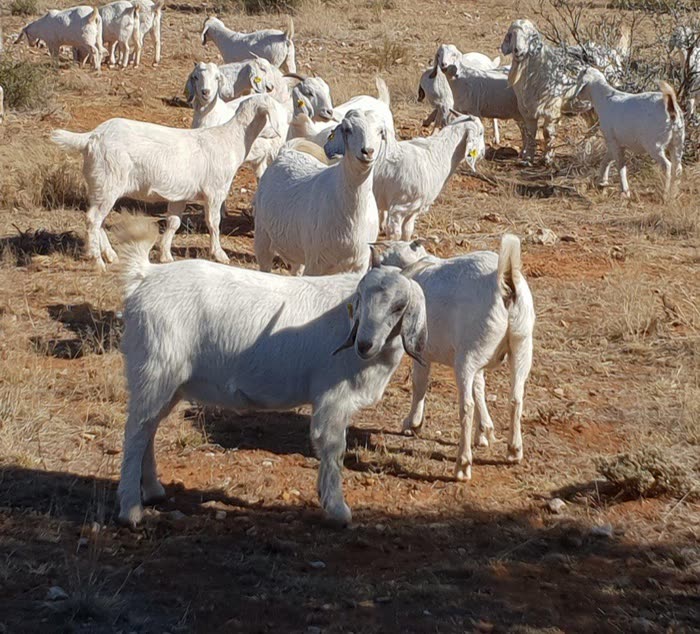
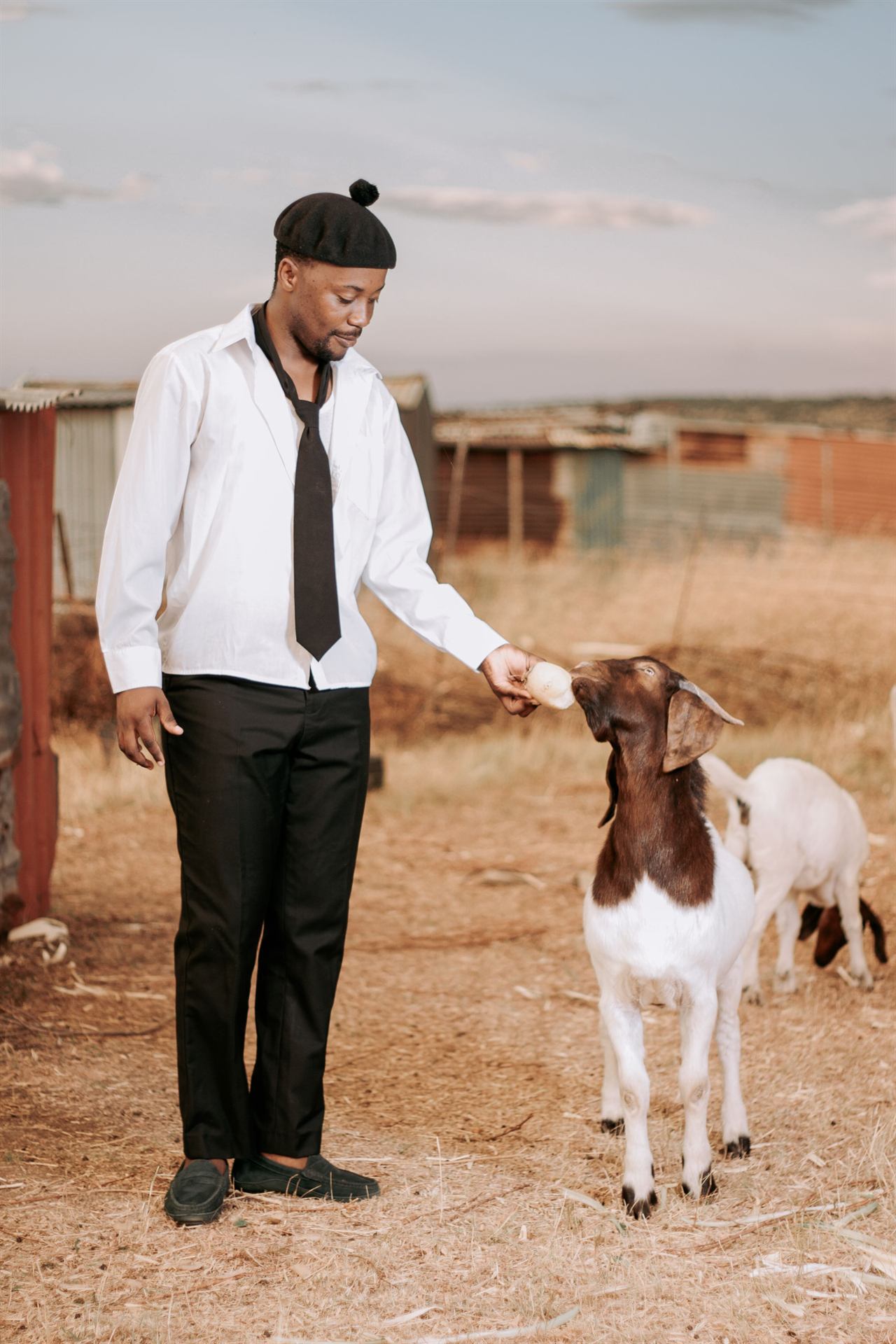
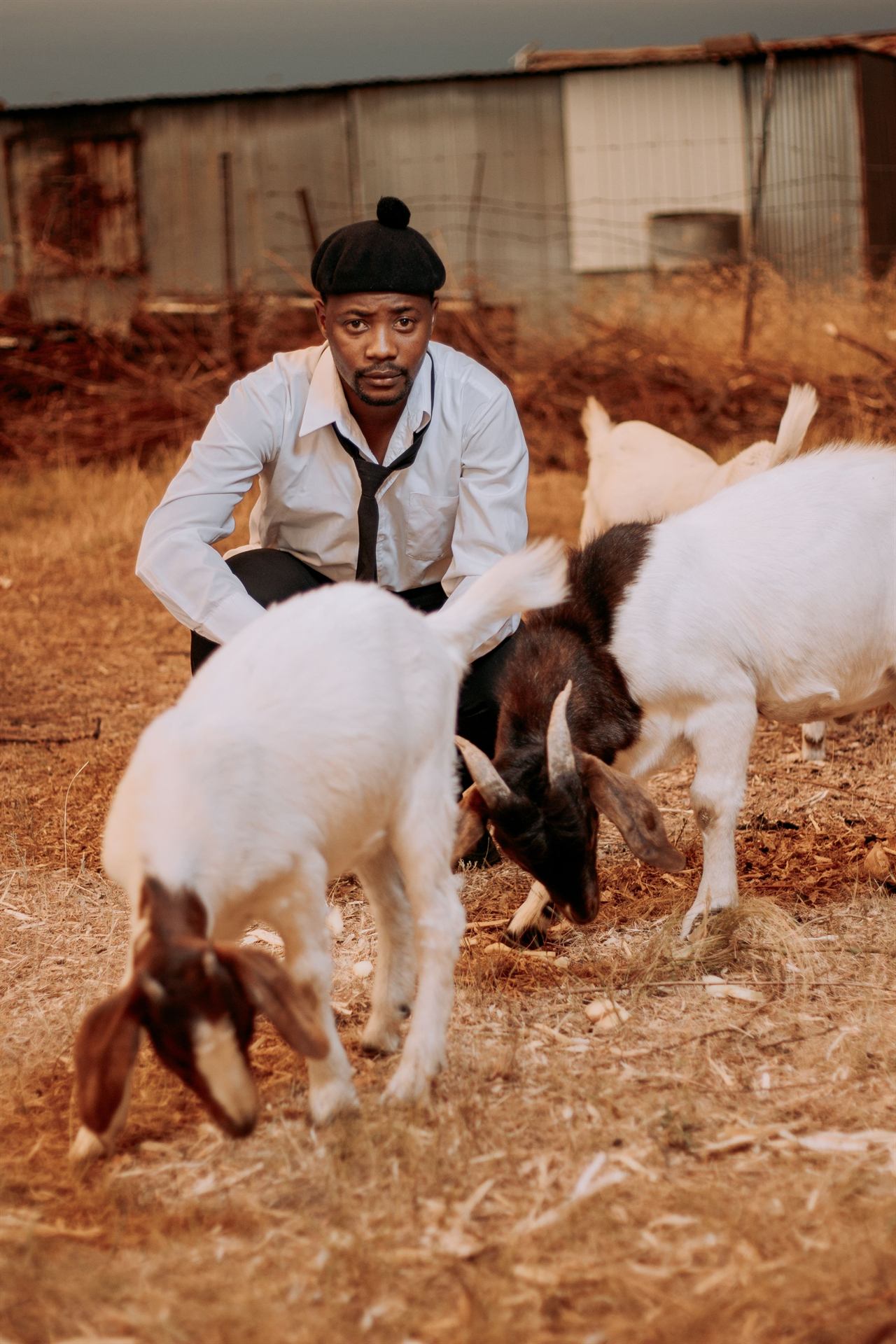
Imports have come from Namibia as well as South Africa. In 2024 the musician Maskiri and his partner were saluted by GBAZ for importing Savanna breeding stock from Namibia, an example that the association's chairperson used to encourage other investors to bring in registered genetics through the proper veterinary channels. Each import must pass veterinary import permits and quarantine, and animals intended for registration should arrive with their foreign registration papers so that the Zimbabwe Herd Book can record their parentage.
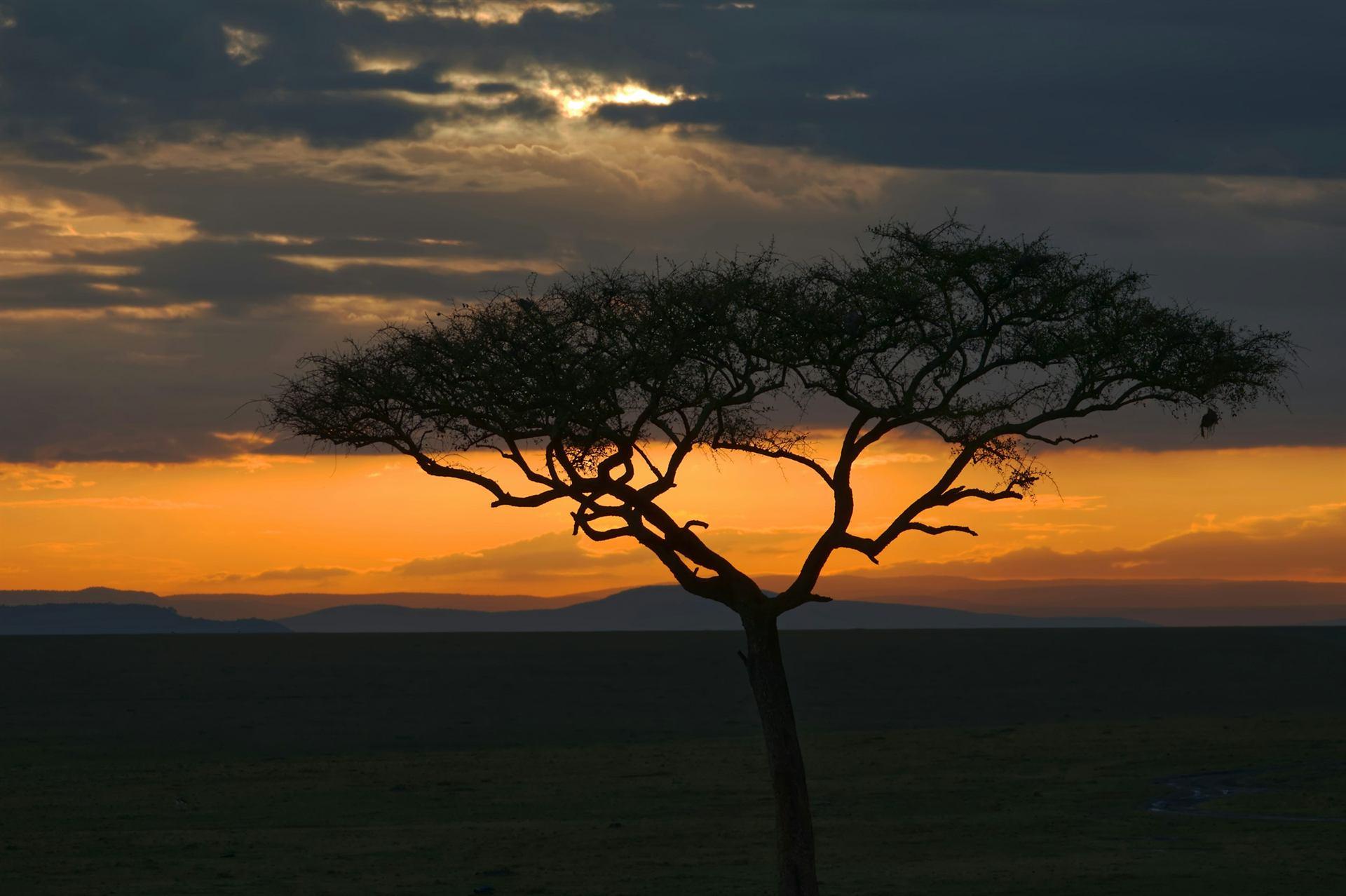
The Savanna's role in Zimbabwe is the one its founders designed it for: the hard country. On bush-encroached ranches in Matabeleland, in the mopane and acacia thornveld of the Zambezi Valley and the south-east lowveld, and on communal grazing where the grass is gone by August, a goat that browses hard, unpalatable shrubs and walks far for water earns its keep. Savanna bucks on Matebele does produce white or pied crosses with the dam's tick and heartwater tolerance and the sire's frame, and the breed's strong undercoat in winter is an advantage on the cold highveld of the south.
Because the breed is scarce, Zimbabwean breeders have an opportunity as well as a challenge. Registered Savanna bucks are in demand, the breed's year-round fertility and easy kidding suit extensive systems, and a well-run stud can supply both pure animals and crossing sires. GBAZ encourages Savanna breeders to register their animals so that the breed's numbers in the country can be counted and its genetics conserved.
| Year | Event |
|---|---|
| 2019 | GBAZ drafts its Savanna breed standard at the first Goat Indaba |
| 2024 | Savanna breeding stock imported from Namibia by private investors; GBAZ encourages registered imports |
| 2025 | Eleven GBAZ breeders inspected by a South African society inspector; Savanna animals eligible for Herd Book registration |
| 2026 | Savanna buck class judged at the Bulawayo Agricultural Show |
Breed standard
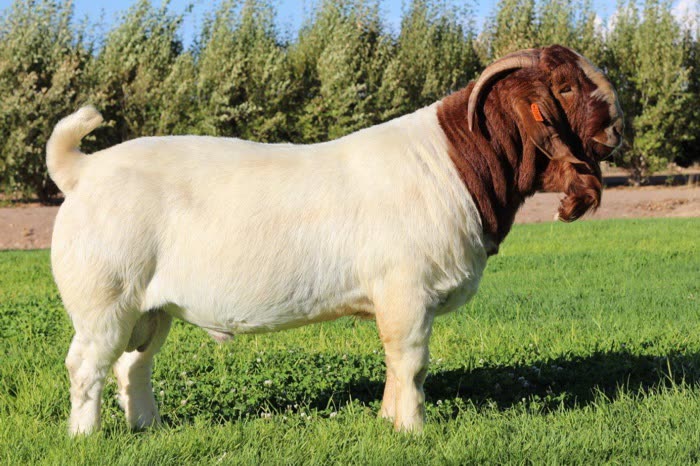
The Savanna standard describes a strong, virile, functionally efficient goat that is lively but not wild. Does are medium-sized, refined and feminine; bucks masculine, robust and well muscled. The standard states the breed's purpose plainly: the animal must withstand heat, sun, cold and rain, travel far for feed and water, browse a wide range of vegetation and be sexually active all year. Pigmentation is the point on which the Savanna standard is strictest; any pink skin is a cull defect.
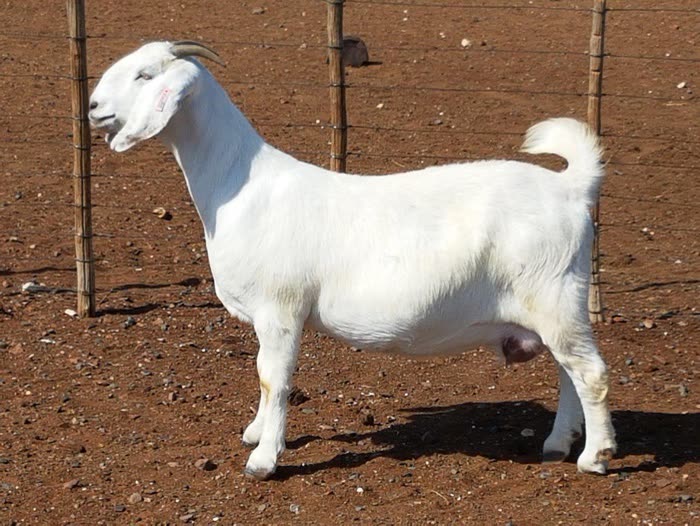
GBAZ applies the standard summarised below at inspection, and inspected animals are registered with the Zimbabwe Herd Book. Where the Savanna standard differs from the Boer standard, notably in the longer neck, the sloping rump, the hooves, the black pigment and the scrotal measurements, the Savanna rule applies.
Summarised from the Savanna standard of excellence maintained by the breed's founding society, as applied by GBAZ at inspections.
- General appearance
- Strong, virile and functionally efficient; lively but not wild. Does medium-sized, refined and feminine; bucks masculine, robust and well muscled. The animal must endure heat, sun, cold and rain, travel far for feed and water, browse a wide range of vegetation and be sexually active all year.
- Head
- Fairly long, slightly curved and broad rather than sharp; a wide mouth with well-muscled, mobile lips; correct bite (6 mm protrusion allowed at eight teeth); lively eyes with black-pigmented lids and protective brow ridges; fairly big, oval, pendulous, well-pigmented, mobile ears; dark oval horns growing backwards, reasonably wide at the base, not pressing on the neck.
- Neck and forequarter
- Neck well muscled and reasonably long, for browsing; forequarter well muscled and of medium width (narrow or very wide discriminated against); shoulder blades firmly attached; withers slightly higher than the back and rump; straight, well-placed front legs with short, strong cannon bones and strong, springy, slightly sloping pasterns. Older bucks show medium skin folds.
- Barrel
- Reasonably long and deep with capacity for roughage; a strong, wide eye muscle; well-sprung ribs; not cylindrical or shallow in older animals.
- Hindquarter
- Wide, with the legs well apart and straight; a rump with a reasonable slope; well muscled; strong hocks with visible tendons, turning neither in nor out; tail straight up, well haired and mobile, with black-pigmented bare skin.
- Legs and feet
- Legs strong and correctly placed, neither too thin nor too fleshy; hooves strong, hard and black, reasonably big, with the claws close together and not prone to foot rot. Faults: knock knees, bandy legs, cow hocks, post legs, sickle hocks, weak pasterns, hooves pointing in or out.
- Skin, pigment and coat
- Skin pigment dark grey to black over the whole body; no light spots on elite animals; any pink skin is a cull defect. Coat totally white, short and of kemp type, with a cashmere undercoat in winter; a few black or red hairs are tolerated but selected against.
- Sexual organs
- Does: a well-formed udder, firmly attached, ideally with two functional teats; double teats are not acceptable; a maximum of three teats per side is allowed where the extra teats are small and blind, and all teats must be separate. Bucks: two large, equal testes in one scrotum, with a split of no more than 2 cm and a circumference of at least 26 cm; one teat per side ideal; a twisted scrotum is a cull defect.
- Colour
- Totally white coat on black skin, with black hooves, horns, muzzle, eyelids and under-tail skin. White is dominant, so coloured kids occasionally appear and are not registered.
- Fertility rule
- Does of six teeth and older must be visibly pregnant, scanned pregnant, hold a recent pregnancy certificate or be suckling kids to be shown or auctioned; bucks of two teeth and older are fertility-tested before a national auction.
- Disqualifications
- Over- or undershot jaw; knock knees, bandy legs, cow hocks, post legs or sickle hocks; legs too thin or too fleshy; weak pasterns; hooves pointing in or out; faulty sexual organs or udders, including a scrotum split over 2 cm or twisted; any structural fault that harms functional efficiency; incomplete or too light pigmentation, including any pink skin.
Performance and production
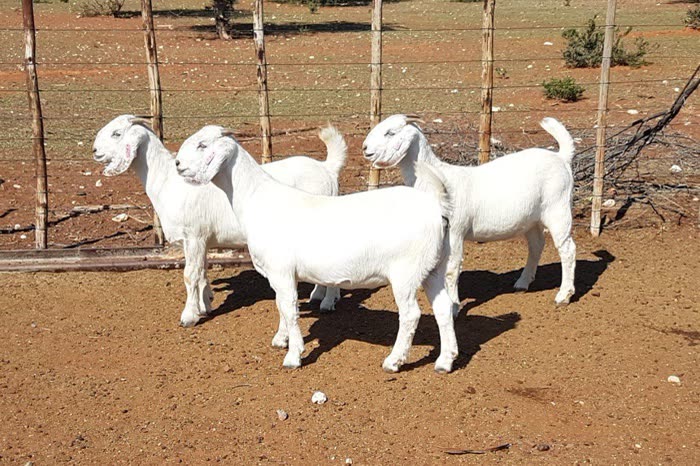
The Savanna is a medium to large goat with a long, deep body. Published mature weights are about 60 kg for does and 100 to 140 kg for bucks, with the breed literature giving a range of 60 to 140 kg overall; North American registries quote wither heights of 48 to 64 cm, lower than the figures for South African studs, where the animals are described as medium to large. Kids at 100 days weigh about 30 kg for bucks and 25 kg for does in stud flocks, and the journal credits the breed with fast growth, good feed conversion and high-quality carcasses from natural grazing.
Reproduction is the breed's strength. The standard requires year-round sexual activity, and the journal reports excellent fertility with many does producing twins or triplets. A Malaysian comparison of Savanna and Kalahari Red does under the same management recorded for the Savanna a conception rate of 92.4 percent, a fertility rate of 89.9 percent, a kidding rate of 137 percent and a prolificacy of 152.3 percent, with pre-weaning kid mortality of 17.5 percent in a humid tropical climate; litter size at birth and at weaning was slightly higher for the Savanna than for the Kalahari Red, though the differences were not significant. Under dry conditions mortality is much lower, and in South African stud flocks kidding rates in the same 150 to 200 percent band as the Boer are reported.
Does kid easily on the veld and defend their kids, and the breed is noted for a long productive life. The carcass is lean and balanced; the white coat and dark skin produce a good hide; and the winter cashmere-type undercoat is shed in spring.
| Measure | Does | Bucks | Note |
|---|---|---|---|
| Mature live weight | about 60 kg | 100 to 140 kg | Range 60 to 140 kg in the literature |
| Height at withers | 48 to 64 cm (registries abroad) | medium to large | South African studs larger |
| Birth weight | 3 to 4 kg | 3 to 4 kg | Twins lighter than singles |
| 100-day weaning weight | about 25 kg | about 30 kg | Stud flocks |
| Growth from the veld | good | good | Balanced, lean carcass |
| Trait | Savanna | Kalahari Red |
|---|---|---|
| Conception rate | 92.4 percent | 90.6 percent |
| Fertility rate | 89.9 percent | 86.8 percent |
| Kidding rate | 137.0 percent | 125.6 percent |
| Prolificacy | 152.3 percent | 144.6 percent |
| Pre-weaning kid mortality (humid climate) | 17.5 percent | 19.7 percent |
Adaptation and husbandry in Zimbabwean conditions
No improved meat breed asks less of the land than the Savanna. It was selected under heat, intense sun, cold and rain with minimal care, it tolerates ticks, worms and drought better than the Boer, and it browses hard, unpalatable shrubs that other goats leave, which makes it useful for bush control as well as meat. The journal notes that the breed's short hair and strong pigmentation make it particularly resilient against external parasites. Its black skin resists sunburn; its white coat reflects heat and makes the goats easy to see in dense bush; and the winter undercoat protects it on the cold southern highveld.
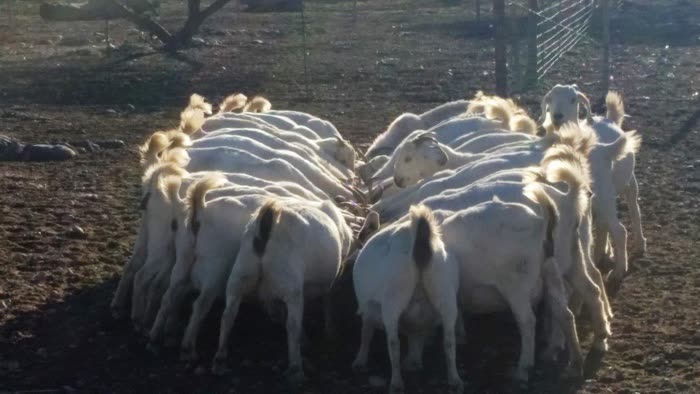
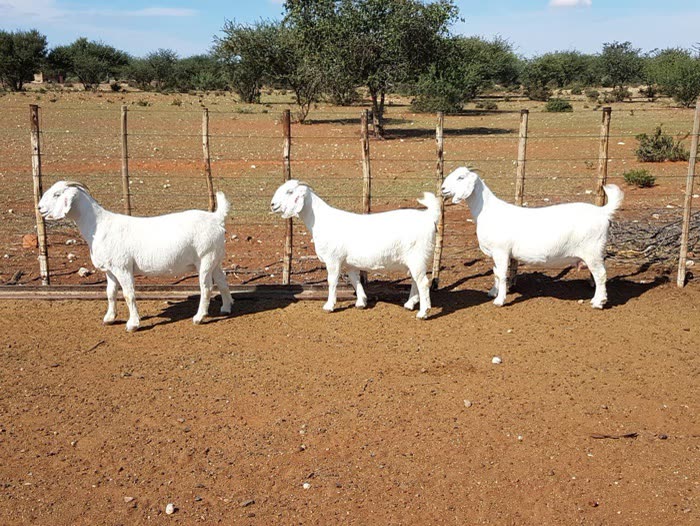
In Zimbabwe the breed suits the extensive systems of Matabeleland, the lowveld and the Zambezi Valley, and it copes with the mopane and acacia thornveld where grass is scarce by August. Supplementary feeding is still worthwhile in a stud flock, because a 60 kg doe rearing twins needs protein in the dry season to wean kids at 25 kg, but the breed will maintain itself and breed on veld that would leave a Boer doe thin. Water within walking distance is the main requirement.
Health care follows the standard routine for improved goats, with less pressure than the Boer faces: strategic dipping or pour-on treatment through the rains, FAMACHA-guided deworming rather than blanket dosing, clostridial vaccination and a heartwater plan where bont ticks occur. Hooves are strong and black and rarely need trimming more than twice a year. The breed's temperament is calm and manageable, and does are protective mothers, so kidding on the veld in a predator-proof camp is usual.
Because the Savanna breeds all year, breeders must decide whether to run the buck with the does continuously, which gives three kiddings in two years but spreads work and risk across the seasons, or to mate in April and May for spring kidding. For a stud that must present pregnant does at shows and auctions, controlled mating with records of service dates is the better choice.
| System | Suitability | Why |
|---|---|---|
| Extensive ranching in Natural Regions IV and V | Very good | Hard browse, long walking, drought and tick tolerance |
| Bush-encroached grazing | Very good | Browses unpalatable shrubs and helps control bush |
| Communal flocks in the south and west | Good as a sire | Savanna buck on Matebele does gives hardy, heavier crosses |
| Wetter highveld of the north-east | Fair | Heartwater and parasite pressure; manage like a Boer flock |
Breeding and selection
The Savanna was made by natural selection, and the breed's societies ask breeders to keep selecting under veld conditions rather than in the feedlot. Reproduction comes first: does that kid every year, rear twins and wean them heavy; bucks that are fertile all year with a scrotal circumference of at least 26 cm. Production comes second, measured as 100-day weight and post-weaning gain from the veld. Conformation to the standard comes third, with particular attention to the black pigment, which must be complete; a single pink patch is a cull defect, and breeders select against the few coloured kids that white's dominance occasionally lets through.
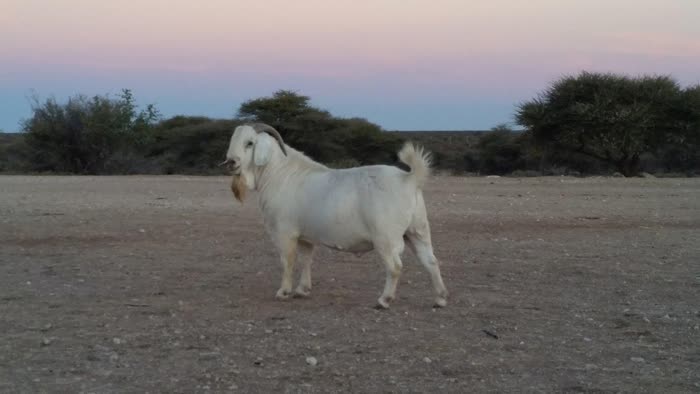
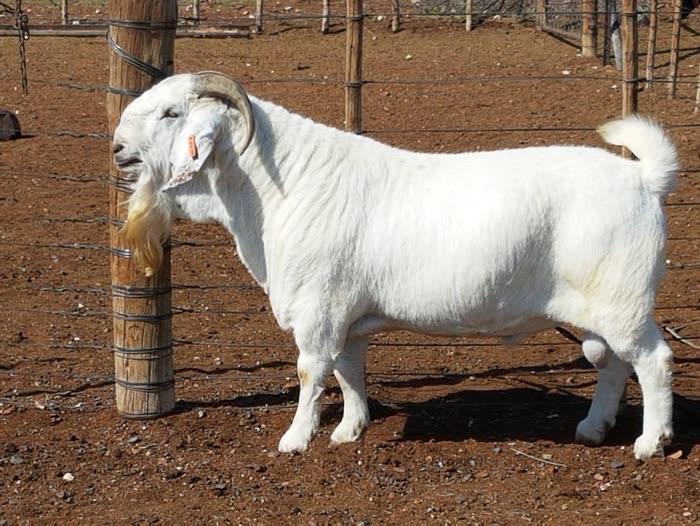
On indigenous does the Savanna is a valuable crossing sire. A Savanna buck on a Matebele doe produces a white or pied first cross that weans heavier and grows larger than the pure indigenous kid while keeping the dam's tick and heartwater tolerance and mothering. White's dominance makes the crosses easy to identify in a mixed flock. The same cautions apply as for the Boer: mate small Mashona does to young, lighter bucks to avoid kidding difficulty, and do not grade a commercial flock beyond three-quarters without providing stud-level feeding and health care.
Because the breed is scarce in Zimbabwe, inbreeding is the particular risk of a small Savanna stud. Breeders should keep full parentage records, exchange or buy in bucks from unrelated lines, and consider the use of imported semen where the Herd Book's rules allow it. GBAZ can help breeders find unrelated registered stock.
| Priority | Trait group | What to measure |
|---|---|---|
| 1 | Reproduction | Kids weaned per doe per year; year-round fertility; ease of kidding; mothering |
| 2 | Production | 100-day weaning weight and post-weaning gain from the veld |
| 3 | Conformation | Breed standard: complete black pigment, long neck, strong black hooves, sloping rump, functional efficiency |
| 4 | Genetic diversity | Full parentage records; unrelated sires; registered imports |
Shows, judging and registration
Savannas are judged in their own classes under the same show and auction conventions as the Boer and Kalahari Red: inspection of every animal before sale, a minimum of ten months and 40 kg at auction, pregnancy or suckling kids required of does of six teeth and older, veterinary fertility testing of bucks before a national auction, and suspension for any manipulation. The judge pays particular attention to pigment on the eyelids, muzzle, under the tail and on the hooves, to the length and muscling of the neck, to the slope of the rump and to the scrotum, where a split of more than 2 cm or a twist is a cull defect (Boer Goat Journal 2025).
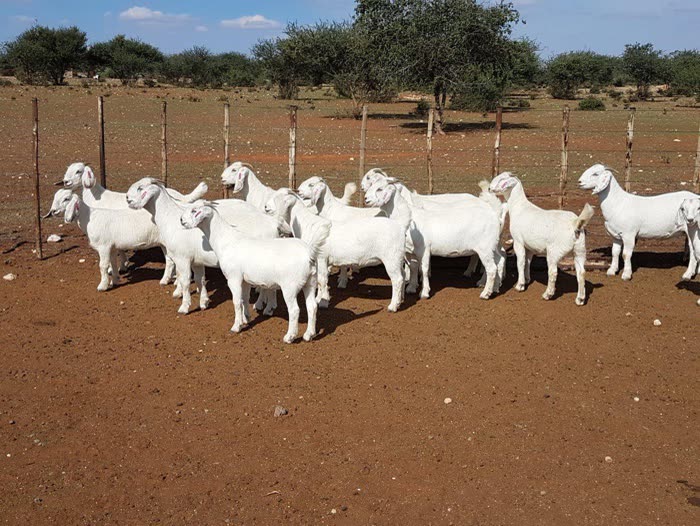
In Zimbabwe the Savanna buck and doe classes at the Bulawayo Agricultural Show and the GBAZ Goat Indaba are the breed's showcase, and the breed is offered at GBAZ auctions. Judges are accredited through the South African society's courses until Zimbabwe has its own panel.
Registration follows the GBAZ path. The breeder joins as a stud breeder member and applies for a stud prefix; a GBAZ inspection classes the animals as stud, flock or cull and records the inspected stock, with a GBAZ Livestock Record Certificate for each; and the stud breeder registers the pedigree with the Zimbabwe Herd Book, the statutory registrar, which issues the registration certificate. Imported animals are registered on the strength of their foreign papers. GBAZ does not issue pedigree certificates itself.
| Step | Who | What happens |
|---|---|---|
| 1 | Breeder and GBAZ | Stud breeder membership; stud prefix; tags and birth notifications |
| 2 | GBAZ inspector | Animals classed stud, flock or cull against the standard; Livestock Record Certificate issued |
| 3 | Zimbabwe Herd Book | Pedigree registered; registration certificate issued by the statutory registrar |
Timeline
Key dates in the history of the breed and its establishment in Zimbabwe.
- 1955 to 1957On the Cilliers farm on the Vaal River, multicoloured lop-eared does are mated to a large white buck and the offspring run under harsh, low-care conditions.
- 1960s to 1980sThe white, black-skinned type is fixed by natural and breeder selection in free-ranging flocks.
- 21 November 1993Savanna breeders' society formed.
- 1994First Savanna exports to the United States; later to Australia and Canada by embryo.
- 2005Collaboration agreement with the Boer Goat and Kalahari Red societies; the Savanna standard joins the standard of excellence.
- 2019GBAZ drafts its Savanna breed standard at the first Goat Indaba.
- 2024Savanna breeding stock imported into Zimbabwe from Namibia by private investors.
- 2025Record Savanna entries at the World Show; GBAZ breeders inspected and eligible for Herd Book registration.
- 2026Savanna buck class judged at the Bulawayo Agricultural Show.
Sources
This book was written from the sources below. Figures are quoted with their origin; where sources disagree the range is given. The breed's origin is stated as history; the standard applied in Zimbabwe is the GBAZ standard, and registration is by the Zimbabwe Herd Book.
- Boer Goat Journal 2025, no. 31: Savanna history and characteristics, society highlights, show and auction rulesBoer Goat Breeders' Association journal (annual)
- Savanna breed standardsBoer Goat Breeders' Association
- Savanna origin and historyBoer Goat Breeders' Association
- Savanna information bookletBoer Goat Breeders' Association
- Maturing pattern for body size, doe reproductive performance and kid mortality rate of Savanna and Red Kalahari goatsUniversiti Putra Malaysia (library record)
- Breed profile: Savanna goatsGoat Journal / Countryside
- World champion Savanna goat breeder's winning formulaFarmer's Weekly
- Savanna goatWikipedia (citing DAD-IS risk status)
- Goat breeders salute Maskiri (3 July 2024): Savanna imports from NamibiaThe Herald
- Eland Zakithi Stud dominates Bulawayo Agricultural Show 2026 sheep and goats competition (24 April 2026)Sunday News
- Choosing the right goat breed: there is no one-size-fits-all goat (30 August 2026)Sunday News
- Zimbabwe's goat industry evolves with new standards (9 February 2026)Farmer's Weekly
Register your Savanna animals
GBAZ sets the breed standard and inspects animals. Stud breeder members register inspected animals with the Zimbabwe Herd Book, the statutory registrar, which issues the registration certificate.
Savanna photographs
Open the photo gallery