Matebele
An illustrated history, breed standard and husbandry guide for the large indigenous goat of south-western Zimbabwe (also Matabele or Ndebele goat)
Origin and history
The Matebele goat, also written Matabele and sometimes called the Ndebele goat, is the large-framed, lop-eared indigenous goat of south-western Zimbabwe. It belongs to the same southern African lop-eared family of goats from which the Boer Goat, the Kalahari Red and the Savanna were later selected in South Africa, and it is the northern representative of that family, found across Matabeleland North and South, parts of the Midlands and Masvingo, and in adjacent areas of Botswana and the Limpopo valley. The name records the Ndebele people who settled the region in the 1830s, but the goat type is older, descended from the lop-eared goats that spread through southern Africa with pastoral communities over many centuries.
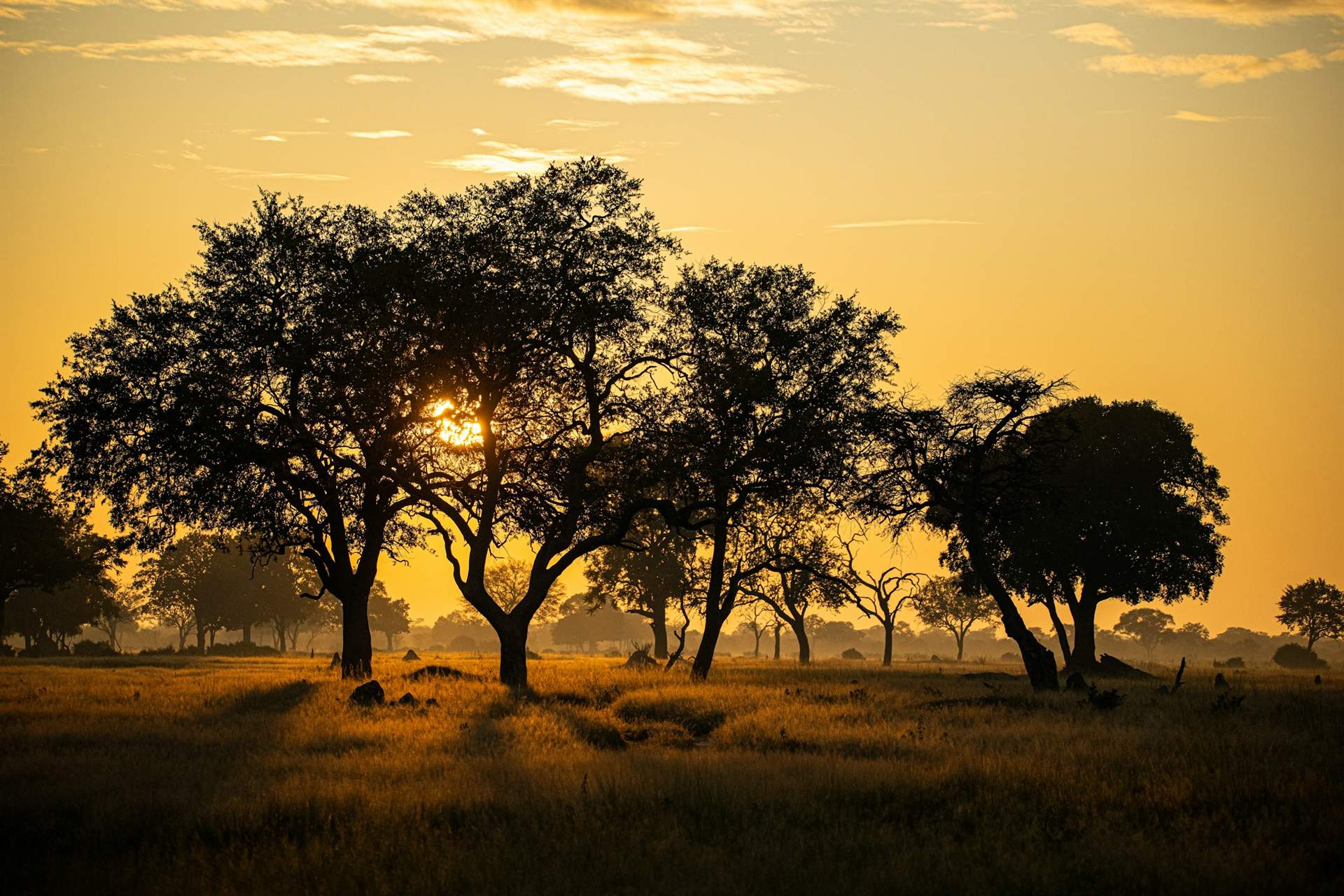
Unlike its South African relatives, the Matebele goat has never been through a formal selection programme. What shaped it was Natural Regions IV and V: low, erratic rainfall, long dry seasons, thornveld and mopane browse, heat, ticks and heartwater, and the need to walk far for food and water. The result is a goat that is prolific for an indigenous type, kids without assistance, rears twins on the veld and tolerates drought and disease that would kill an exotic goat, while carrying a larger frame than the Mashona goat of the north.
The breed has been studied for longer than any other goat in Zimbabwe. An experimental flock of indigenous Matebele goats has been kept at Matopos Research Station near Bulawayo for about a century, and work there by Arrowsmith and Ward in 1981 and Tawonezvi and Ward in 1986 gave the FAO breed description of 1991 its figures for birth weight, growth, litter size and fertility. Sibanda, Bryant and Ndlovu followed the weight and body condition of does in communal flocks through their breeding cycle in 2000, and studies on the effect of kidding season showed how much the dry season costs a doe and her kid. In 2023 Moyo and colleagues at Lupane State University published a morphometric and morphological baseline for 120 communal Matebele goats, and found them lighter and smaller than the research-station figures, a result they cite as the case for structured selection.
Recognition as a breed came in 2021, when GBAZ, with the EU-funded VALUE project under the Zimbabwe Agricultural Growth Programme, published the first written breed standards for the Matebele and Mashona goats, compiled by the indigenous goat specialist Joe Sikosana. The standards were written for conservation, selection and the recognition of indigenous stud breeders, and the 2025 GBAZ Goat Indaba in Bulawayo was devoted to them.
| Type | Where | Status |
|---|---|---|
| Matebele goat | South-western Zimbabwe, eastern Botswana | Indigenous; standard 2021 (GBAZ and VALUE) |
| Tswana goat | Botswana | Indigenous; same family |
| Boer Goat | Eastern Cape origin, worldwide | Improved meat breed; standard 1959 |
| Kalahari Red | Northern Cape and Namibia origin | Improved meat breed; status 1998 |
| Savanna | Northern Cape origin | Improved meat breed; society 1993 |
Role in Zimbabwe
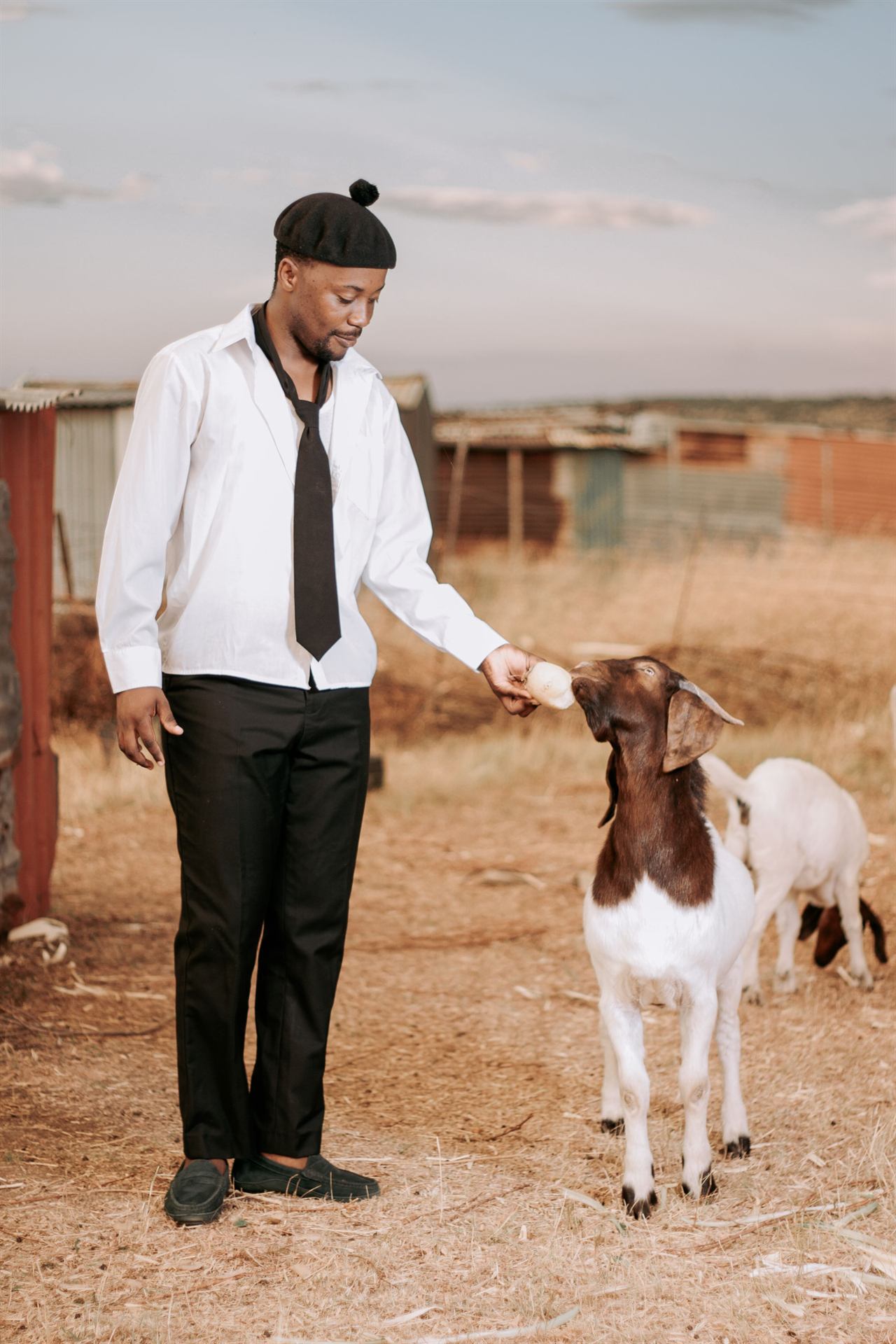
The Matebele goat is the goat of the south-west. In Matabeleland North and South, where cattle numbers fell with repeated droughts and where goats are sold throughout the year to meet school fees and household needs, the Matebele goat is the main source of meat and cash for communal and resettled farmers. Of Zimbabwe's roughly five million goats, the great majority are indigenous, and in the communal areas of the south-west almost all are of the Matebele type. The 1982 census counted only a few thousand goats on commercial farms in Matabeleland; the breed has always been a smallholder animal.
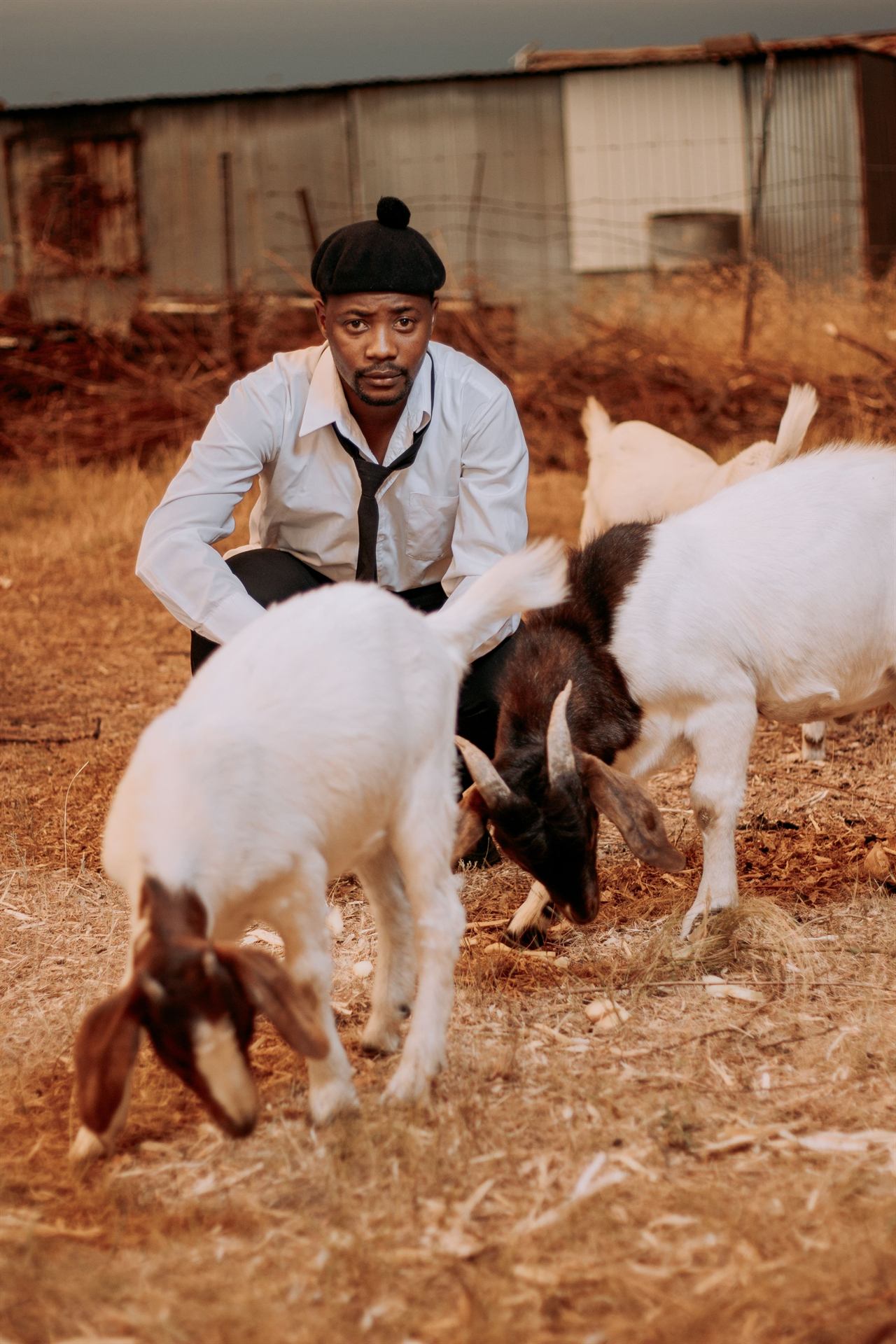
Its economic role is changing. The Matebele goat is the preferred dam line for crossbreeding in Matabeleland: Boer and Kalahari Red bucks on Matebele does produce first-cross kids that wean several kilograms heavier and dress out better while keeping the dam's tolerance of drought, ticks and heartwater. Cooperatives such as the Queens of Reds group in Umzingwane, the Mzilikazi stud in Umguza and the FAO and Sustainable Wildlife Management crossbreeding work in Binga have all built on Matebele does. ZimTrade's goat-meat export model, piloted in Gwanda with GBAZ in 2025, depends on offtake from exactly these flocks.
The breed is also kept pure, and increasingly on purpose. Matopos Research Institute's flock and the flocks of agricultural colleges conserve and teach the type; Matopos won the indigenous goat doe class and Esigodini Agricultural College the indigenous buck class at the Bulawayo Agricultural Show in 2026. GBAZ's 2021 standard allows a communal or commercial farmer who selects the larger, better-framed Matebele goats, records them and presents them for inspection to register a recorded or pedigree flock with the Zimbabwe Herd Book and sell bucks at a premium. The Lupane authors argue that the breed's small size in communal flocks is as much a management and selection problem as a genetic one, and that structured selection can recover the frame recorded at Matopos without losing adaptation.
For GBAZ the Matebele goat is a conservation priority as well as a commercial one. Uncontrolled crossbreeding with exotic bucks is the main threat to the pure type, and the association's advice is that every crossbreeding flock keep a nucleus of pure Matebele does bred to a selected Matebele buck.
| Year | Event |
|---|---|
| 1981 and 1986 | Matopos Research Station performance data published (Arrowsmith and Ward; Tawonezvi and Ward) |
| 1991 | FAO breed description of the Ndebele (Matebele) goat with Matopos figures |
| 2000 | Sibanda, Bryant and Ndlovu: live weight and body condition of Matebele does in communal flocks |
| 2021 | First written breed standard published by GBAZ with the VALUE project |
| 2023 | Lupane State University morphometric baseline for 120 communal Matebele goats |
| 2025 | GBAZ Goat Indaba in Bulawayo devoted to the Matebele and Mashona standards; ZimTrade goat-meat export pilot in Gwanda |
| 2026 | Indigenous goat classes judged at the Bulawayo Agricultural Show |
Breed standard
The GBAZ and VALUE standard of 2021 for the Matebele goat is a qualitative framework. It describes the type, the structure that makes the goat functional in the south-western veld and the faults that exclude an animal from breeding, and it leaves numeric minimums for weight and height to be set by GBAZ from the Matopos, Lupane and recorded-flock data. Its purpose is to improve size and uniformity within the breed while keeping the adaptation that makes it valuable.
GBAZ applies the standard summarised below at inspection. Matebele animals that pass are recorded in the GBAZ register and may be registered with the Zimbabwe Herd Book, the statutory registrar, which issues the registration certificate. Because the breed was never selected for a single colour, all solid and mixed colours are accepted; the standard concentrates on pigment, frame, structure and function.
The GBAZ and VALUE 2021 breed standard for the Matebele goat, a qualitative framework compiled for conservation, selection and the recognition of stud breeders. Numeric minimums are to be set by GBAZ from the Matopos, Lupane and recorded-flock data.
- General type
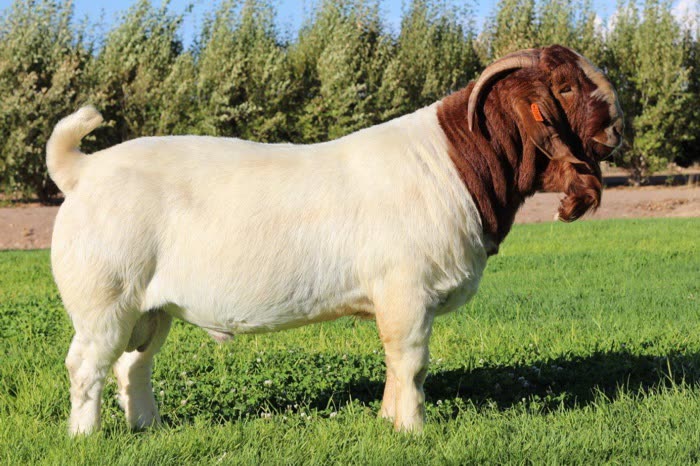
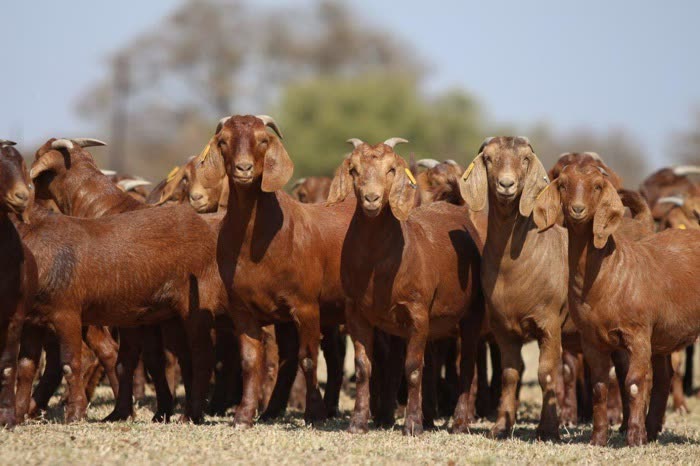
- A medium to large, hardy, lop-eared goat of the southern African family with a straight face, a short smooth coat in any solid or mixed colour and a frame that can walk long distances. Does feminine, with a slight wedge to the front; bucks masculine, heavier in the head, neck and forequarter. The animal must breed throughout the year, kid unassisted, rear twins on the veld and tolerate drought, heat, ticks and heartwater.
- Head
- Medium to long, with a straight profile, a strong jaw and a correct bite; alert eyes with pigmented lids; broad lop ears of medium length, sometimes with the tip turned up; horns, where present, strong and backward, flattened in bucks, finer in does, and never pressing on the neck. A beard is acceptable in both sexes.
- Neck and forequarter
- A neck of medium length, well joined to the shoulder; a deep chest; shoulders firmly attached; withers slightly lower than the sacrum is typical of the breed; strong, straight front legs with dark, hard hooves.
- Barrel
- Long and deep, with well-sprung ribs, a strong back and good rumen capacity for coarse browse. Faults: a weak or dipped back, slab sides.
- Hindquarter
- Wide, with a reasonably sloping rump; well-muscled thighs; strong hocks; tail carried up.
- Legs and feet
- Strong, correctly placed and able to walk long distances; dark, hard hooves. Faults: knock knees, bandy legs, cow hocks, sickle hocks, weak pasterns, hooves pointing in or out.
- Skin and coat
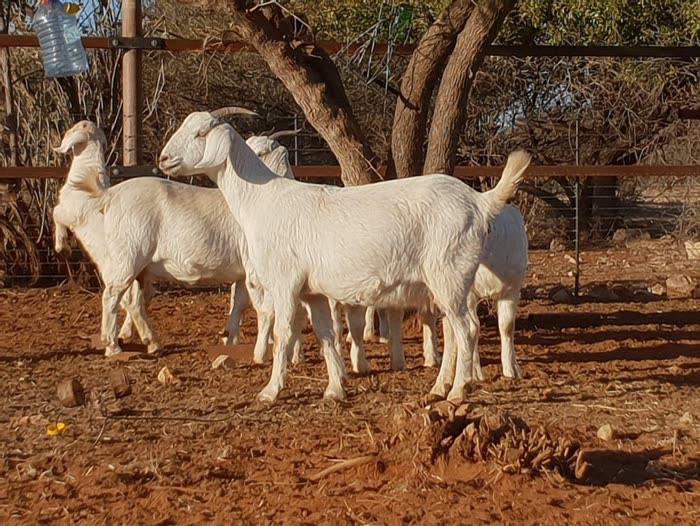
- Loose, pigmented skin; short, smooth hair, patchy or plain; a degree of pigment on the hairless parts is required. A longer coat or a cape of hair over the shoulders in bucks is acceptable. All solid and mixed colours are accepted; white, cream, black, brown, fawn and pied patterns are common.
- Sexual organs
- Does: a well-attached udder with two functional, well-placed teats. Bucks: two equal, well-developed testes in one scrotum, with no split or twist.
- Disqualifications
- Jaw faults (over- or undershot); blue eyes; pink or unpigmented skin; split or calabash teats; cryptorchidism or a split scrotum; leg deformities; dwarfism; wry face; horns pressing on the neck. Animals outside the type (for example short-eared Mashona type or animals showing obvious exotic blood) are not registered as Matebele.
| Measure | Matopos station | Communal (Sibanda 2000) | Lupane 2023 | Well-managed (extension) |
|---|---|---|---|---|
| Mature doe weight | 39 kg | 30 kg at mating, 35 kg after kidding | 19 kg at 24 months, 31 kg at 48 months | 30 to 45 kg |
| Mature buck weight | 50 to 55 kg | 26 kg at 24 months | 40 to 65 kg | |
| Height at withers | 57 cm mean, 64 cm in 4-year-old does | 65 to 70 cm | ||
| Birth weight | 2.5 kg | 2.5 kg | ||
| Weaning weight | 15 to 16 kg at 140 to 150 days (females) | 12 to 16 kg |
Performance and production
The Matopos Research Station flock is the best-recorded indigenous goat population in southern Africa, and its figures, reported by the FAO in 1991, set the benchmark for the breed. Mature males weigh 50 to 55 kg and females about 39 kg. Kids are born at 2.5 kg (905 records), weigh 13.9 kg at three months and about 15 to 16 kg at weaning at 140 to 150 days (twins about 13.5 kg), and females reach 31 kg at 18 months, 35 kg at 30 months, 38.7 kg at 42 months and 39 kg at 54 months. Average daily gain is 109 g from birth to 12 weeks, 97 g to 20 weeks and 39 g after weaning. Castrated males of about two years dressed out at 43.5 to 43.7 percent at 31 kg live weight.
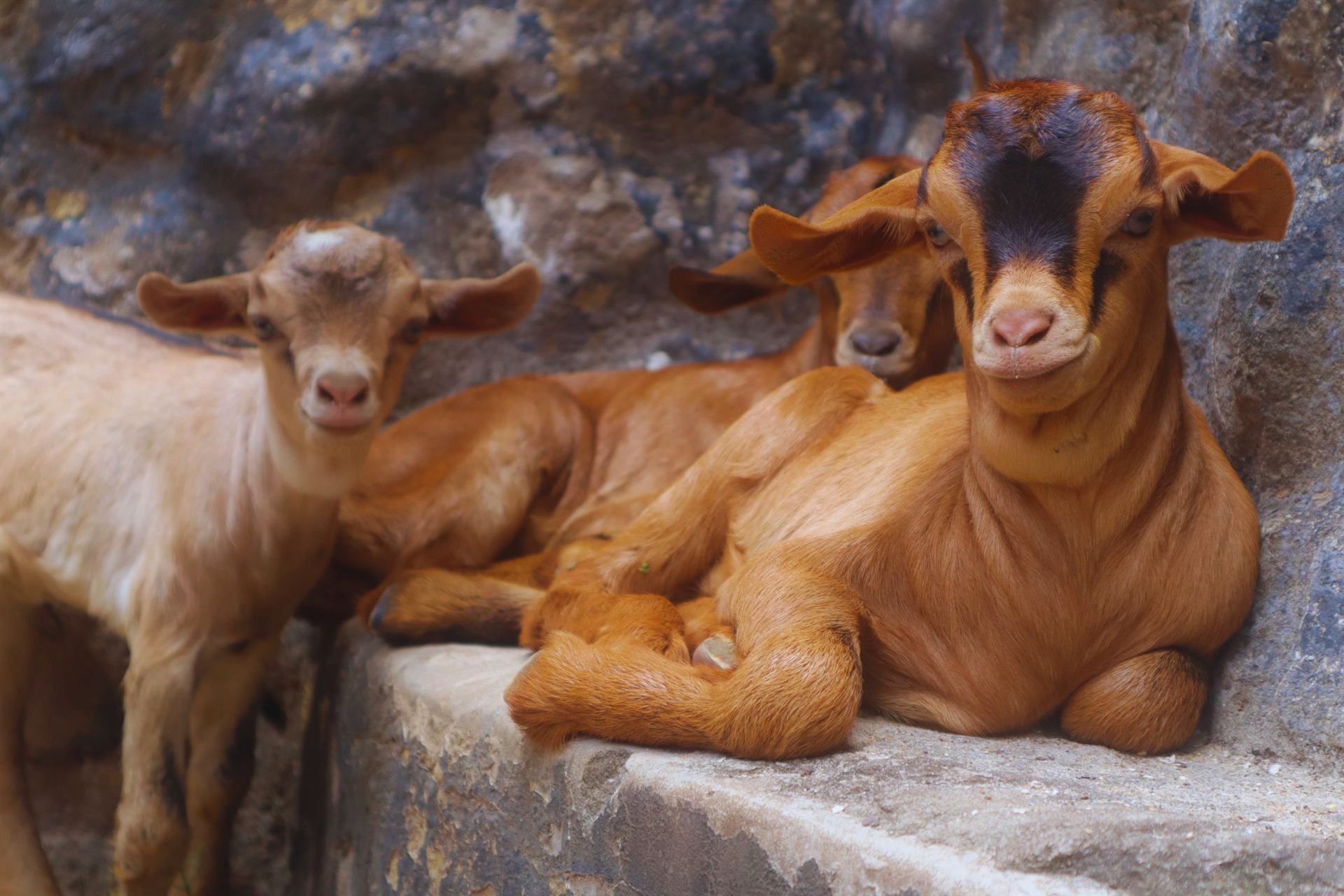
Reproduction is the breed's strongest trait. At Matopos the litter size was 1.54 (549 records): 36 percent of does kidding had singles, 62 percent twins and 1.6 percent triplets, and two-thirds of does mated gave birth to more than one kid. Fertility, the percentage of does mated that kidded, was 87.5 percent, and 160 kids were born per 100 does mated. The breed kids throughout the year; age at first kidding of 14 to 23 months and kidding intervals of about 240 days are reported for communal flocks.
Communal performance is lower, and the gap is the measure of what management and selection could recover. Sibanda, Bryant and Ndlovu found that adult does in communal flocks in southern Zimbabwe weighed about 30 kg at mating and 35 kg after kidding, with first-kidders at 24 kg, and that kidding in the late dry season cost a doe about a quarter of her post-kidding weight. Studies of kidding season in farm flocks recorded weaning weights of about 9.7 kg overall, with kids born in the best season weaning 6 kg heavier than dry-season kids. The 2023 Lupane sample of 120 communal goats averaged only 21 kg, with males 26 kg and females 19 kg at 24 months and females 31 kg at 48 months, and a mean wither height of 57 cm; 85 percent were horned, about 30 percent bearded, and black-and-white was the commonest colour pattern.
The lesson of the figures is that the Matebele goat is genetically capable of 39 kg does and 55 kg bucks, 160 percent kidding and 15 kg weaners, and that communal flocks get perhaps half of that because of dry-season nutrition, uncontrolled mating and no selection. Both the gap and the way to close it are known.
| Age | Live weight | Note |
|---|---|---|
| Birth | 2.5 kg | 905 records |
| 3 months | 13.9 kg | |
| 140 to 150 days (weaning) | 15.2 to 15.9 kg | Twins 13.5 kg; 759 records |
| 18 months | 31.3 kg | Twins 28.6 kg |
| 30 months | 35.0 kg | |
| 42 months | 38.7 kg | |
| 54 months | 39.1 kg | Mature doe |
| Mature buck | 50 to 55 kg |
| Trait | Value |
|---|---|
| Litter size | 1.54 (549 records) |
| Birth type | 36.4 percent single, 62.0 percent twin, 1.6 percent triplet |
| Fertility (does mated that kidded) | 87.5 percent |
| Kids born per 100 does mated | 160 |
| Daily gain, birth to 12 weeks | 109 g |
| Daily gain, birth to 20 weeks | 97 g |
| Daily gain after weaning | 39 g |
| Dressing percentage, castrates about 2 years | 43.5 to 43.7 percent at 31 kg |
| Measure | Value | Source |
|---|---|---|
| Adult doe weight at mating | about 30 kg | Sibanda, Bryant and Ndlovu 2000 |
| Adult doe weight after kidding | about 35 kg | Sibanda, Bryant and Ndlovu 2000 |
| First-kidder weight | about 24 kg | Sibanda, Bryant and Ndlovu 2000 |
| Weight loss from late-dry-season kidding | about 25 percent of post-kidding weight | Sibanda, Bryant and Ndlovu 2000 |
| Weaning weight, farm flocks | about 9.7 kg; best-season kids 6 kg heavier | Kidding-season study (BSAP proceedings) |
| Mean live weight, 120 communal goats | 21 kg (males 26 kg, females 19 kg at 24 months) | Moyo et al. 2023 |
| Wither height | 57 cm mean; 64 cm in 4-year-old does | Moyo et al. 2023 |
| Age at first kidding; kidding interval | 14 to 23 months; about 240 days | IntechOpen review 2021 |
Adaptation and husbandry in Zimbabwean conditions
The Matebele goat is excellent in Natural Regions IV and V and good everywhere else. It survives drought and heat, tolerates ticks, heartwater and internal parasites, walks far to browse mopane and acacia, and kids unassisted. The husbandry that pays is not the husbandry of an exotic stud but the removal of the losses that the research identifies: dry-season weight loss in does, kidding in the wrong season, predation and straying of kids, and uncontrolled mating.
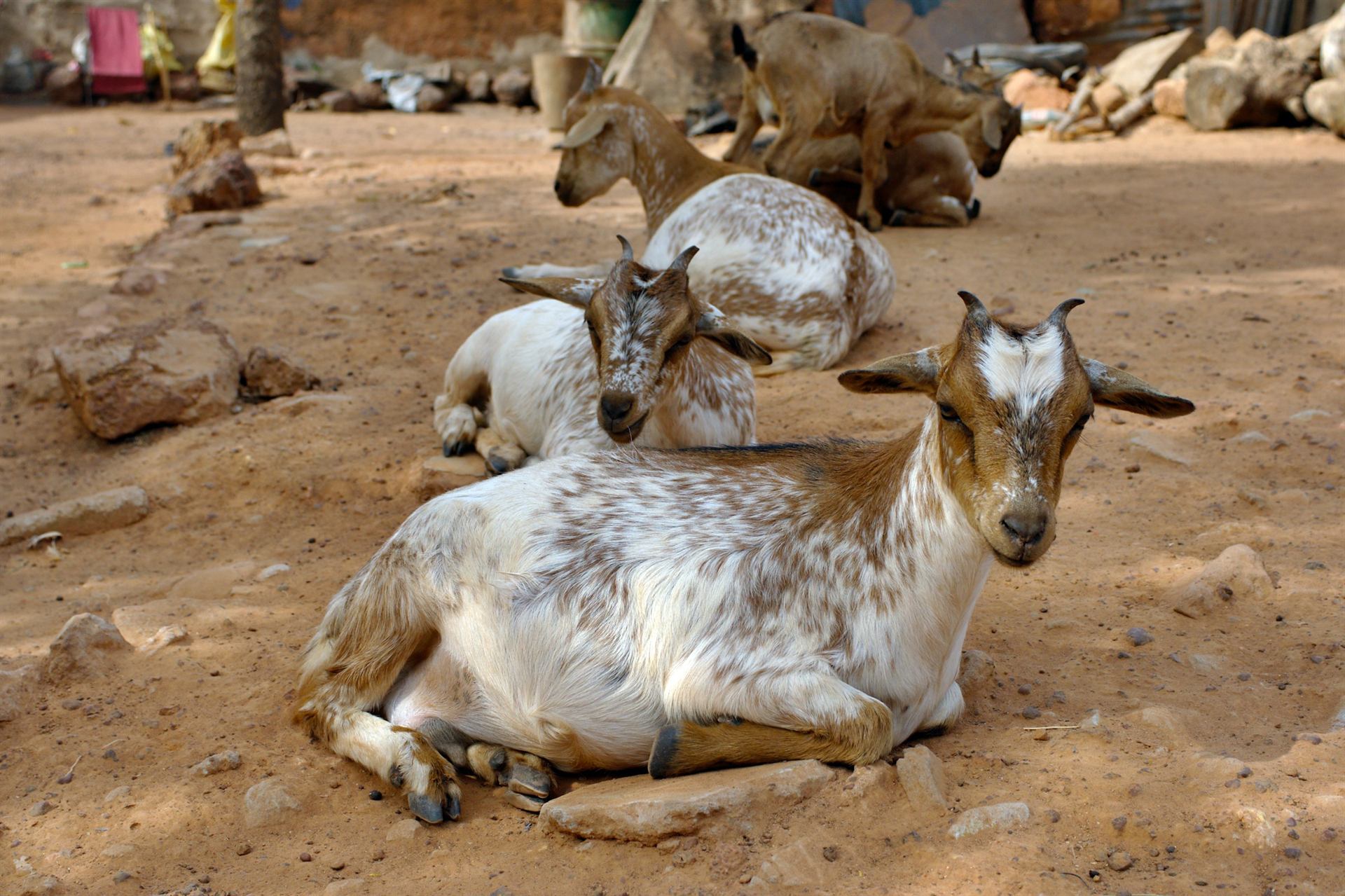
Nutrition is the first lever. Sibanda and colleagues showed that a doe kidding in the late dry season loses about a quarter of her weight, and the kidding-season studies showed that dry-season kids wean 6 kg lighter than kids born on green browse. A protein lick or legume hay for does in late pregnancy and early lactation from August to November, and access to browse rather than grazed-out grass, protect both the doe's next conception and the kid's weaning weight. Water within a few kilometres is essential in the south-west's dry months.
Mating management is the second lever. Separating the buck and mating in April and May so that kids arrive in September and October on the first browse, or in October for March kidding at the end of the rains, puts kids on the ground when the doe can feed them. Where bucks cannot be separated, a buck apron or a cluster rotation of bucks between households achieves the same. One selected buck to 25 to 35 does, replaced every two seasons by an unrelated buck, prevents the inbreeding that follows from using the flock's own sons.
Health care can be light but should be deliberate. Tick control during the rains, FAMACHA-guided deworming rather than blanket dosing, a clostridial vaccine where available, and a dry, secure night kraal that keeps kids from predators and mud will keep losses low. The breed's loose, pigmented skin and short coat resist sun and external parasites; its main health risks are at kidding, in kids in the wet season, and in does under drought stress.
| Month | Flock task | Health task |
|---|---|---|
| March to April | Select does for mating; cull does that have not kidded in 18 months; condition-score | Deworm by FAMACHA after the rains; trim feet |
| April to May | Controlled mating, 1 buck to 25 to 35 does | Check buck feet and testes; dip if ticks persist |
| June to August | Browse and crop residues; keep does walking to water | Vaccinate where available |
| August to October | Protein lick or legume hay for late-pregnant does; prepare kid pens | Watch for heartwater in bont-tick areas |
| September to October | Kidding on first browse; tag, weigh and record kids | Navel care; predator-proof kraal |
| November to January | Kids follow does; creep area for twins | Tick control as rains begin; coccidiosis watch |
| February to March | Wean at 140 to 150 days; weigh and record; select replacements | Deworm weaners if FAMACHA indicates |
Breeding and selection
Selection within the breed is the purpose of the 2021 standard and the explicit recommendation of the Lupane study. The Matopos flock shows what a Matebele goat can be; the communal sample shows what uncontrolled breeding makes of it. Choosing replacement doelings from the larger, early-kidding, twin-rearing dams, and bucks from the heaviest weaners with correct structure, broad lop ears, full pigment and horns that do not press on the neck, recovers frame size within a few generations without losing the adaptation that natural selection built in.
Because 62 percent of Matopos does bore twins, twinning is already in the breed and does not need to be imported. What needs selecting is the doe that rears both twins to 15 kg at weaning, which depends on milk and mothering as much as on frame. Records of birth type, weaning weight and dam identity, kept with ear tags from birth, are the tools; GBAZ's farm record templates provide the registers.
Crossbreeding is the breed's other role, and it works best when it is deliberate. A Boer or Kalahari Red buck on a Matebele doe produces a first-cross kid that weans 3 to 5 kg heavier and dresses out better while keeping the dam's tolerance of drought, ticks and heartwater; the Kalahari Red cross is favoured in Matabeleland for its colour and camouflage, the Boer cross for its weight, and the Savanna cross for its hardiness on hard browse. The first cross should be the end product for meat. Grading up beyond three-quarters exotic in a low-input flock trades away the disease tolerance that makes the system work, and a flock that crosses everything loses the pure dam line within a decade. GBAZ advises every crossbreeding flock to keep a nucleus of pure Matebele does mated to a selected Matebele buck for replacements.
Breeders who want to register Matebele goats should tag kids at birth, record dam and sire, birth type, birth weight and weaning weight, and present the flock for GBAZ inspection. The numeric minimums under the standard will be set from exactly these records.
| Mating | Kid | Use | Caution |
|---|---|---|---|
| Selected Matebele buck x Matebele doe | Pure | Replacement does; registered indigenous breeding; conservation nucleus | Rotate unrelated bucks every two seasons |
| Kalahari Red buck x Matebele doe | First cross | Meat kids 3 to 5 kg heavier at weaning; red colour | Feed the doe in late pregnancy |
| Boer buck x Matebele doe | First cross | Heaviest meat kids | Larger kids; does in good condition at mating |
| Savanna buck x Matebele doe | First cross | Hardy white crosses for hard browse | Scarce sires |
| Improver buck x first-cross doe | Three-quarter bred | Commercial dams, heavier kids | Needs lick, dip and drench like an exotic |
Shows, judging and registration
Indigenous goat classes are now part of Zimbabwe's shows. At the 2026 Bulawayo Agricultural Show the indigenous goat doe class was won by Matopos Research Institute and the buck class by Esigodini Agricultural College, alongside Boer, Kalahari Red, Savanna and Saanen classes, and the GBAZ Goat Indaba, which devoted its 2025 programme in Bulawayo to the Matebele and Mashona standards, includes indigenous classes and demonstrations. Judging follows the 2021 standard: the judge looks for the Matebele type, handles for muscling and condition, checks the mouth, the pigment, the ears and horns and the sexual organs, and places the animal on frame and functional correctness within the breed, not on size against exotic breeds.
Registration follows the GBAZ path that applies to every breed. The breeder, or a cluster of breeders, joins GBAZ and applies for a stud prefix once a recorded flock exists. A GBAZ inspection classes the animals against the standard and records the inspected stock, with a GBAZ Livestock Record Certificate for each recorded animal. The stud breeder then registers the animals with the Zimbabwe Herd Book, the statutory registrar, which keeps the pedigree and issues the registration certificate. Foundation animals from communal flocks without known parentage are entered as foundation stock; their recorded descendants build the pedigree.
GBAZ encourages smallholders in the south-west to register as clusters that share an inspected buck, keep a common record and present animals together at inspection and at sales; the ZimTrade export pilot in Gwanda works through such clusters. A society for the indigenous breeds under GBAZ is expected to follow the Boer Goat Society of Zimbabwe.
| Step | Who | What happens |
|---|---|---|
| 1 | Farmer or cluster and GBAZ | Membership; stud prefix; tags, birth notifications and weights recorded |
| 2 | GBAZ inspector | Animals classed against the 2021 standard; Livestock Record Certificate issued for recorded animals |
| 3 | Zimbabwe Herd Book | Foundation and pedigree animals registered; registration certificate issued by the statutory registrar |
Timeline
Key dates in the history of the Matebele goat and its recognition as a breed.
- Before 1800Lop-eared goats of the southern African family are kept across the south-western plateau and the Limpopo valley.
- 1830sNdebele settlement of the south-west; the region's goat takes the name Matebele.
- Early 1900sAn indigenous goat flock is established at Matopos Research Station near Bulawayo and kept for about a century.
- 1981 and 1986Matopos performance data published by Arrowsmith and Ward and by Tawonezvi and Ward.
- 1991FAO breed description of the Ndebele (Matebele) goat: 2.5 kg birth weight, litter size 1.54, 160 kids per 100 does mated.
- 2000Sibanda, Bryant and Ndlovu publish doe weight and body condition changes in communal flocks.
- 2012 onwardsKalahari Red and Boer bucks used on Matebele does by studs and cooperatives in Matabeleland.
- 2018GBAZ re-founded as the umbrella body for all goat breeds in Zimbabwe.
- 2021GBAZ and the VALUE project publish the first written breed standard for the Matebele goat, compiled by Joe Sikosana.
- 2023Lupane State University morphometric baseline for 120 communal Matebele goats published.
- 2025GBAZ Goat Indaba in Bulawayo devoted to the Matebele and Mashona standards; ZimTrade export pilot in Gwanda.
- 2026Indigenous goat classes judged at the Bulawayo Agricultural Show, won by Matopos Research Institute and Esigodini Agricultural College.
Sources
This book was written from the sources below. Figures are quoted with their origin; where sources disagree the range is given. The GBAZ and VALUE standard document of 2021 is not published online; its framework is summarised from press reports and the association's own material, and numeric minimums will be set by GBAZ from recorded flocks.
- Small ruminant production and the small ruminant genetic resource in tropical Africa (Wilson, 1991): Ndebele (Matebele) goat description with Matopos dataFAO
- Moyo et al. (2023): Morphometric and morphological analysis of indigenous Matabele goats of Zimbabwe. Biotechnology in Animal Husbandry 39(2)Institute for Animal Husbandry, Belgrade
- Sibanda, L.M., Bryant, M.J. and Ndlovu, L.R. (2000): Live weight and body condition changes of Matebele does during their breeding cycle in a semi-arid environment. Small Ruminant Research 35:271-275CGSpace
- The effect of kidding season on productivity of indigenous Matebele goats of Zimbabwe (Proceedings of the British Society of Animal Science)Cambridge University Press
- Litter size in the Matebele goat and its effects on productivity (Proceedings of the British Society of Animal Production)Cambridge University Press
- Goat breeders develop indigenous breeding standards (24 August 2021)The Herald
- Enhancing Zimbabwe's Matebele and Mashona goats through breed standardsNewsDay
- Goat Indaba 2025: preserving our indigenous goatsCITE
- Zimbabwe's goat industry evolves with new standards (9 February 2026)Farmer's Weekly
- Eland Zakithi Stud dominates Bulawayo Agricultural Show 2026 sheep and goats competition (24 April 2026): indigenous goat classesSunday News
- ZimTrade launches model to propel goat meat exports (31 October 2025)The Herald
- Farmer builds strong genetic foundation for goat breeders (Mzilikazi stud: Kalahari Red on Matebele crosses)The Chronicle
- Choosing the right goat breed: there is no one-size-fits-all goat (30 August 2026)Sunday News
- Goat value chain scoping study report (VALUE project)ActionAid Zimbabwe
Register your Matebele animals
GBAZ sets the breed standard and inspects animals. Stud breeder members register inspected animals with the Zimbabwe Herd Book, the statutory registrar, which issues the registration certificate.
Indigenous goat photographs
Open the photo gallery