Mashona
An illustrated history, breed standard and husbandry guide for the indigenous goat of northern and eastern Zimbabwe
Origin and history
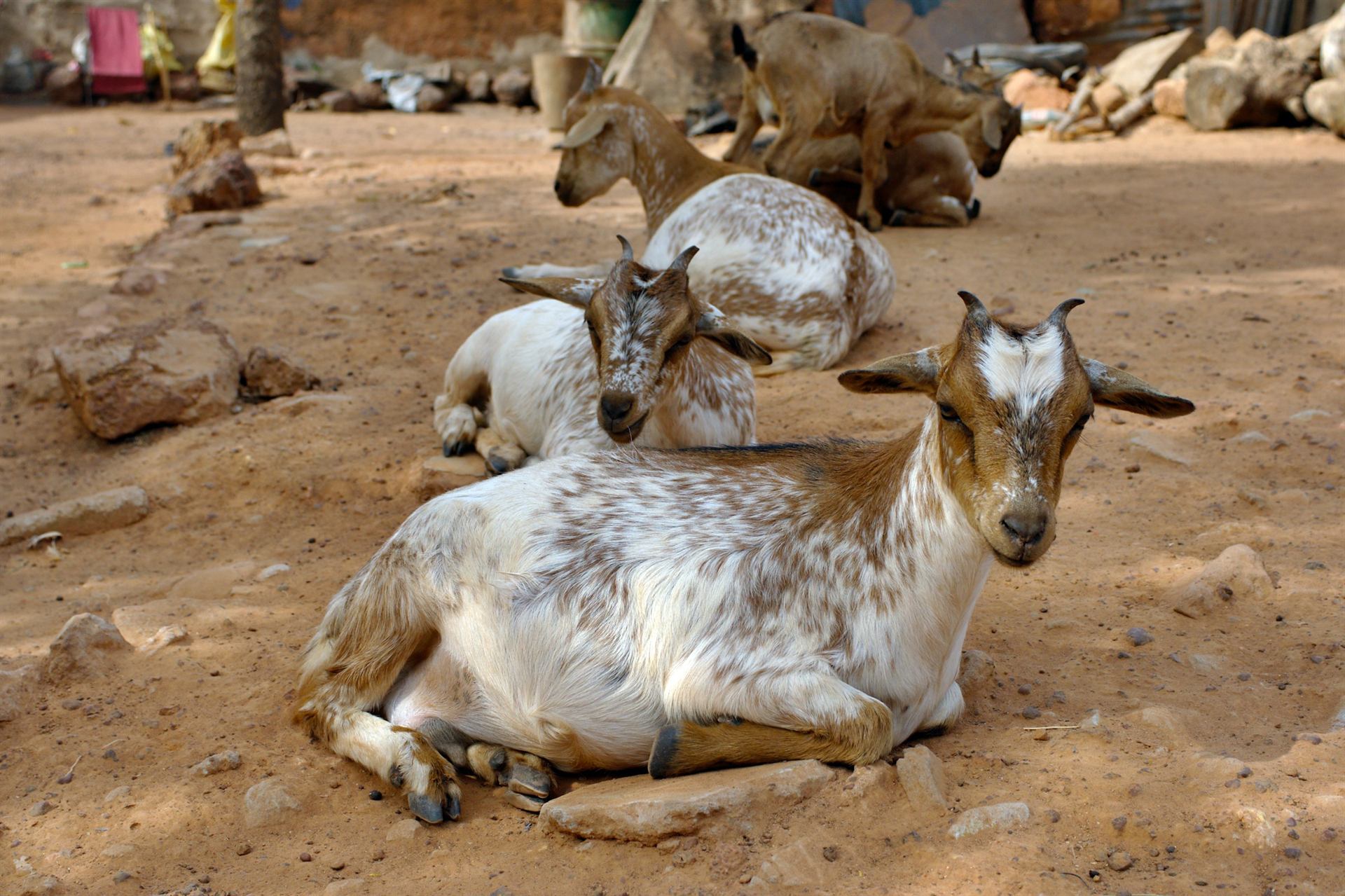
The Mashona goat is the small, compact, short-eared goat that has grazed and browsed the plateau of northern and eastern Zimbabwe for as long as people have farmed there. It belongs to the Small East African group of breeds, a family of hardy goats that stretches from the Zambezi north through Zambia, Malawi and Mozambique to Tanzania, Kenya and Uganda. Goats of this type came south with Bantu-speaking farmers more than a thousand years ago, and the Mashona goat is their descendant, shaped by centuries of natural selection on the highveld and in the Zambezi Valley rather than by any breeding programme.
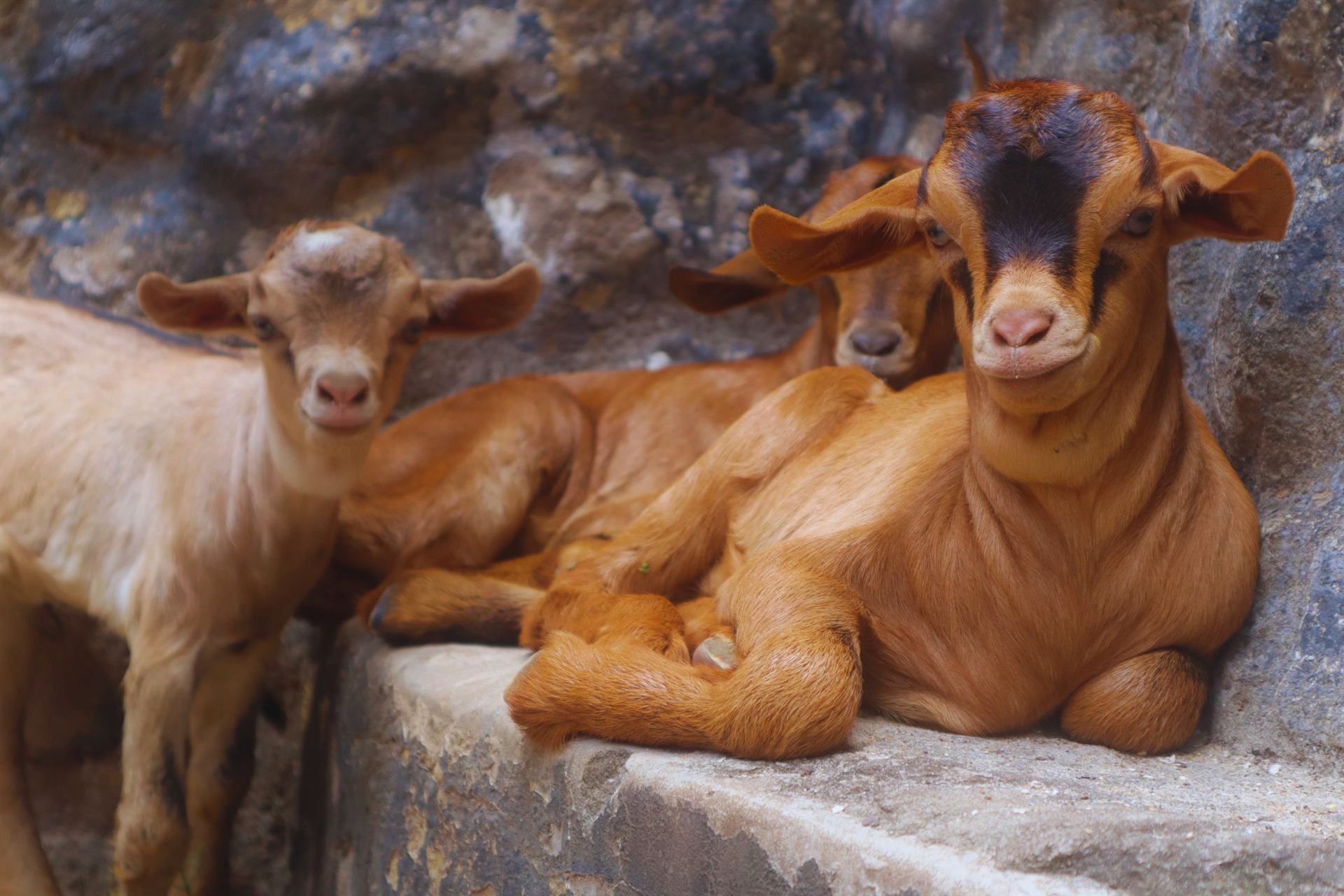
No society wrote a standard for it, and no stud selected it. What selected the Mashona goat was the environment: heat and cold on the plateau, tick-borne disease and internal parasites in the wetter north-east, long dry seasons, predators, and the demands of households that needed goats for meat, milk, cash, lobola and ceremony and could offer little in return. The result is a goat that matures early, breeds throughout the year, kids with little trouble, rears its kid under low inputs and survives disease that kills exotic goats. It is small, which is a cost in meat, but it is the most numerous goat in Zimbabwe and the foundation of most smallholder flocks.
Scientists described the type in the twentieth century. The FAO and ILRI classified it within the Small East African group, research stations at Henderson and Makoholi recorded its birth and weaning weights in the 1980s, and a six-year study of a traditionally managed flock in north-east Zimbabwe in the 1990s documented its growth, kid losses and seasonal pattern. A survey recorded in the ILRI DAGRIS database found its colours to be mainly white, brown and black. Together with the larger Matebele goat of the south-west, the Mashona accounts for well over nine in ten of the goats in Zimbabwe's communal areas.
Recognition as a breed in its own right came in 2021, when the Goat Breeders Association of Zimbabwe, working with the EU-funded VALUE project under the Zimbabwe Agricultural Growth Programme, published the first written breed standards for the Mashona and Matebele goats. Compiled by the indigenous goat specialist Joe Sikosana, the standards were written to conserve the breed, to guide the selection of better-framed animals and to allow smallholders who keep Mashona goats to become recognised stud breeders. The 2025 GBAZ Goat Indaba in Bulawayo was devoted to the two indigenous standards.
| Country | Local type | Note |
|---|---|---|
| Zimbabwe | Mashona goat | Northern and eastern plateau, Zambezi Valley |
| Zambia and Malawi | Small East African | Same group; similar size and colours |
| Mozambique | Landim and Small East African | Lowland types |
| Tanzania, Kenya, Uganda | Small East African | Original range of the group |
| Zimbabwe (south-west) | Matebele goat | Larger lop-eared type of the southern African family, not Small East African |
Role in Zimbabwe
The Mashona goat did not arrive in Zimbabwe; Zimbabwe is its home. Its role is the role of the household goat across the Mashonaland provinces, the Midlands, Manicaland and the Zambezi Valley: meat for the family and for sale, milk for orphaned infants in the old way, cash in an emergency, an animal for ceremony and a store of value that reproduces. Of Zimbabwe's roughly five million goats, the great majority are kept by smallholders, and of the goats in communal areas more than 97 percent are of the Mashona or Matebele type.
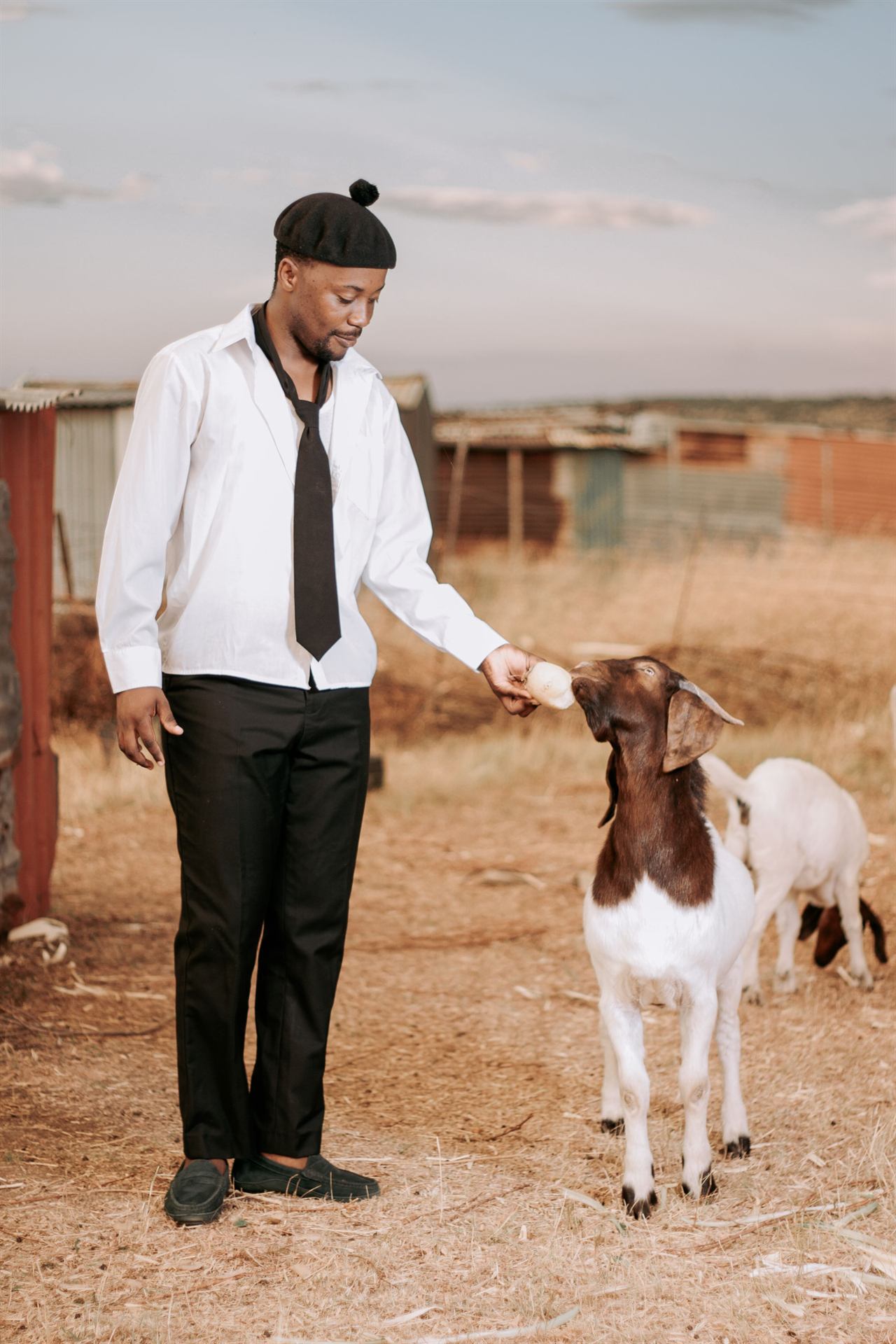
Its economic importance is in its numbers and its resilience rather than its size. A Mashona doe weaning one kid a year on crop residues, thornveld browse and no veterinary care still produces more meat per kilogram of feed and per dollar of input than an exotic doe that needs lick, dip and drench to survive. The Ministry of Agriculture's research officers have promoted the breed as the climate-resilient goat for smallholder systems, and the VALUE project's scoping study identified improvement of the indigenous flock, rather than its replacement, as the realistic path to commercialisation for most farmers.
GBAZ's 2021 standard gives Mashona breeders a route into formal breeding for the first time. A smallholder who selects the larger, better-framed animals from a communal flock, records them and presents them for GBAZ inspection can register them as a recorded or pedigree flock with the Zimbabwe Herd Book, and sell bucks to neighbours at a premium. Research stations and agricultural colleges keep indigenous goat flocks for teaching and conservation, and indigenous goat classes are judged at the Bulawayo Agricultural Show, where Esigodini Agricultural College and Matopos Research Institute won the indigenous buck and doe classes in 2026.
The breed is also the dam of most of Zimbabwe's crossbred goats. Boer, Kalahari Red and Saanen bucks on Mashona does produce kids that grow faster or milk better than the pure Mashona while keeping much of the dam's tolerance of disease, and the first cross is the commonest improved goat on smallholdings in the north and east.
| Measure | Figure | Source |
|---|---|---|
| National goat population, 2025 | about 5.1 million | National livestock assessment, cited by Manica Post 2026 |
| Share kept by smallholders | about 80 to 95 percent | AMA and GBAZ, 2019 to 2024 |
| Communal-area goats of Mashona or Matebele type | over 97 percent | Livestock Matters 2019 |
| Formal market share of goat sales | about 21 percent | AMA 2024 |
Breed standard
The GBAZ and VALUE standard of 2021 is a qualitative framework: it describes the type, the structure that makes a Mashona goat functional and the faults that exclude an animal from breeding, and it leaves the numeric minimums for weight and height to be set by GBAZ from recorded flocks as data accumulate. Its purpose is conservation and improvement at the same time: to keep the breed's adaptation while selecting the larger, better-framed and more uniform animals within it.
GBAZ applies the standard summarised below at inspection. Mashona animals that pass are recorded in the GBAZ register and may be registered with the Zimbabwe Herd Book, the statutory registrar, which issues the registration certificate. Because the Mashona goat was never selected for a single colour, the standard accepts all solid and mixed colours and concentrates on pigment, structure and function.
The GBAZ and VALUE 2021 breed standard for the Mashona goat, a qualitative framework compiled for conservation, selection and the recognition of stud breeders. Numeric minimums are to be set by GBAZ from recorded flocks.
- General type
- A small, compact, hardy goat of the Small East African type, not dwarf, with a straight face, short ears and a short smooth coat in any solid or mixed colour. Does feminine and alert; bucks masculine, with a heavier neck and shoulder. The animal must breed throughout the year, mature early, kid without assistance and rear its kid under low inputs.
- Head
- Short to medium in length with a straight profile, a strong jaw and a correct bite; alert eyes with pigmented lids; short ears carried horizontally or semi-erect; horns, where present, short and upright or slightly backward, not pressing on the neck. A beard is common and acceptable; wattles are acceptable.
- Neck and forequarter
- A short, strong neck well joined to the body; well-set shoulders; a chest of good depth for the size; straight, well-placed front legs with hard hooves.
- Barrel
- Compact and deep with well-sprung ribs relative to size, a strong back and good rumen capacity for coarse feed and crop residues.
- Hindquarter
- A moderately sloping rump; buttocks and thighs well muscled for the size; strong hocks.
- Legs and feet
- Short, strong and correct, able to walk to browse and water; hard, well-shaped hooves. Faults: knock knees, bandy legs, cow hocks, sickle hocks, weak pasterns.
- Skin and coat
- Pigmented skin; a smooth, short to medium coat, soft and flat-lying. All solid and mixed colours are accepted; white, brown and black are the commonest. Light or unpigmented skin on the hairless parts is a fault.
- Sexual organs
- Does: a well-attached udder with two functional, well-placed teats. Bucks: two equal, well-developed testes in one scrotum with no split or twist.
- Disqualifications
- Jaw faults (over- or undershot); blue eyes; pink or unpigmented skin; split or calabash teats; cryptorchidism or a split scrotum; leg deformities; wry face. Dwarf (achondroplastic) types and undershot jaws are discriminated against, and animals outside the type (for example lop-eared or very large animals of Matebele or exotic type) are not registered as Mashona.
| Point | Mashona | Matebele |
|---|---|---|
| Frame | Small, compact, not dwarf | Medium to large |
| Ears | Short, carried horizontally or semi-erect | Broad, medium-length lop ears |
| Horns | Short, upright or slightly back | Strong, backward, flat in bucks |
| Neck | Short and strong | Medium length |
| Height at withers | 50 to 57 cm | 57 to 70 cm |
| Particular caution | Dwarf (achondroplastic) types discriminated against | Horns pressing on the neck discriminated against |
Performance and production
The Mashona goat is small. Mature does weigh 25 to 30 kg, with an average doe live mass of about 25 kg in communal flocks, and bucks 30 to 40 kg; height at the withers is about 50 to 57 cm. Kids are born at 1.9 to 2.4 kg on farm according to the DAGRIS records, and at about 3 kg in the Makoholi research station flock recorded by Khombe in the early 1980s, where males were heavier and grew faster to weaning than females and year of birth affected weaning weight but not birth weight or survival. On-farm weaning weight at 180 days is about 10 kg.
The six-year study of a traditionally managed flock in north-east Zimbabwe by Ndlovu and Simela found that growth rate declined steadily from two weeks of age to weaning at 180 days, that kids born in the hot dry season were heavier at 60, 90 and 180 days than kids born in the hot wet season, and that 19.4 percent of the 294 kids born left the flock before 180 days, mainly through loss and predation rather than disease. The authors concluded that slow growth and long kidding intervals, not kid mortality, were what kept the weight of weaned kid per doe per year low, and that better feeding of does and earlier remating would raise output more than any other change.
Reproduction is steady rather than spectacular. The doe breeds all year and matures early, often kidding first at 12 to 15 months, but twinning under communal management is only about 10 to 20 percent, so most does rear one kid at a time. Kidding intervals of eight to twelve months are usual, giving about one kid per doe per year. Kid mortality is low relative to exotic goats under the same disease pressure, which is the breed's great advantage in the heartwater-prone north-east.
The carcass is lean and small, 10 to 15 kg dressed, and is valued for its taste. Dressing percentages of 40 to 45 percent are typical of indigenous goats of this size.
| Measure | Does | Bucks | Note |
|---|---|---|---|
| Mature live weight | 25 to 30 kg | 30 to 40 kg | Average communal doe about 25 kg |
| Height at withers | 50 to 57 cm | up to 64 cm | |
| Birth weight | 1.9 to 2.4 kg (farm); about 3 kg (station) | slightly heavier | DAGRIS; Makoholi 1981 to 1984 |
| Weaning weight, 180 days | about 10 kg | about 11 kg | On farm, DAGRIS |
| Dressed carcass | 10 to 15 kg | 10 to 15 kg | Lean, well flavoured |
| Trait | Value |
|---|---|
| Breeding season | All year |
| Age at first kidding | 12 to 15 months |
| Twinning rate | 10 to 20 percent |
| Kidding interval | 8 to 12 months |
| Kid losses to 180 days | 19.4 percent in a six-year flock study, mainly loss and predation |
Adaptation and husbandry in Zimbabwean conditions
The Mashona goat is good to excellent across Natural Regions II to V and is the most disease- and parasite-tolerant goat in the wetter, heartwater-prone north-east. It thrives on low inputs, browses a wide range of plants, uses crop residues well and walks to water without complaint. Its small frame is an advantage in the kraal and on the road and a disadvantage only at the scale. The husbandry that pays is the husbandry that removes the small losses that add up: predation, kid losses in the wet season, dry-season weight loss and long kidding intervals.
Housing should be a dry, raised or well-drained kraal that keeps kids out of mud and away from predators at night; the north-east's wet summers make foot rot and pneumonia the main housing risks. Feeding is about the dry season: a protein lick or a handful of crushed cowpea or velvet bean hay for does in late pregnancy and lactation from August to November lifts kid birth weight and milk and shortens the interval to the next kidding. Clean water is the cheapest supplement.
Health care can be light but should be deliberate. The breed tolerates ticks and heartwater, but kids and does under stress still die of both; dipping or pour-on treatment during the rains, FAMACHA checks for worms and a clostridial vaccine where it is available are enough for most flocks. Because the kid losses in the Ndlovu and Simela study were mostly to predators and straying, a herder or a secure kid pen does more for survival than a drug.
Mating management is where the Mashona flock gains most. Running a buck with the does all year gives kiddings in every season, including the hot wet season when kids do worst. Separating the buck and mating in April and May for September kidding, or in October for March kidding, puts kids on the ground when they survive and grow best, and allows the doe to be remated in good condition. For farmers who cannot separate bucks, a buck apron or a rotation of bucks between households is a practical alternative.
| Month | Flock task | Health task |
|---|---|---|
| March to April | Select does for mating; cull does that have not kidded in 18 months | Deworm by FAMACHA after the rains; trim feet |
| April to May | Mating, 1 buck to 25 to 30 does | Check buck feet and testes |
| June to August | Crop residues and browse; start lick for pregnant does | Vaccinate where available |
| September to October | Kidding; secure kid pen; tag and record kids | Watch for heartwater and navel infection |
| November to January | Kids follow does; avoid wet, muddy kraals | Dip or pour-on against ticks; coccidiosis watch |
| February to March | Wean at about 150 to 180 days; weigh and record | Deworm weaners if FAMACHA indicates |
Breeding and selection
Selection within the Mashona goat is the purpose of the 2021 standard. The breed's smallness is partly environmental and partly genetic, and a communal flock contains does of 20 kg and does of 32 kg under the same management. Choosing replacement doelings from the larger, early-kidding, twin-rearing dams, and bucks from the heaviest weaners with correct structure and full pigment, raises frame size and output within a few generations without losing the breed's adaptation. The Lupane morphometric work on the Matebele goat makes the same case for both indigenous breeds: structured selection, not replacement, is the path to a bigger indigenous goat.
The buck is the fastest lever. Most communal flocks use whichever buck is present, often a young son of the flock, which drives inbreeding and selects nothing. Choosing one inspected buck for every 25 to 30 does, replacing him every two seasons with an unrelated buck from a recorded flock, and castrating or selling the rest at weaning will change a flock faster than any feed.
Crossbreeding has its place, with a caution. Boer and Kalahari Red bucks on Mashona does produce first-cross kids that wean several kilograms heavier and dress out better; Saanen bucks on Mashona does produce dual-purpose daughters that milk for the household. Because the Mashona doe is small, large exotic bucks can cause kidding difficulty, so young, lighter bucks should be used on small does and does should be in good condition at mating. The first cross should be the end product for meat; grading up beyond half exotic in a low-input flock trades the dam's disease tolerance for growth the farmer cannot feed. A sound plan for a smallholder is a nucleus of pure Mashona does bred pure for replacements and the rest mated to an improver buck for sale kids.
Breeders who want to register Mashona goats should tag kids at birth, record dam and sire, birth type, birth weight and weaning weight, and present the flock for GBAZ inspection. Numeric minimums under the standard will be set from exactly these records.
| Mating | Kid | Use | Caution |
|---|---|---|---|
| Mashona buck (selected) x Mashona doe | Pure | Replacement does; registered indigenous breeding | Avoid using the flock's own sons; rotate bucks |
| Boer or Kalahari Red buck x Mashona doe | First cross | Meat kids weaned 3 to 6 kg heavier | Young, light bucks on small does; feed the doe |
| Saanen buck x Mashona doe | First cross | Dual-purpose household milk | Shade and feeding for the daughters |
| Improver buck x first-cross doe | Three-quarter bred | Heavier meat kids | Needs lick, dip and drench like an exotic |
Shows, judging and registration
Indigenous goat classes are a new feature of Zimbabwe's shows. The Bulawayo Agricultural Show judged indigenous goat buck and doe classes in 2026, won by Esigodini Agricultural College and Matopos Research Institute, and the GBAZ Goat Indaba, which devoted its 2025 programme in Bulawayo to the Matebele and Mashona standards, includes indigenous classes and demonstrations. Judging follows the 2021 standard: the judge looks for the type described in the standard, handles for muscling and condition, checks the mouth, the pigment and the sexual organs, and places the animal on functional correctness and frame within the breed rather than on size against exotic breeds.
Registration follows the GBAZ path that applies to every breed. The breeder joins GBAZ, in most cases first as an ordinary member and then as a stud breeder member once a recorded flock exists, and applies for a stud prefix. A GBAZ inspection classes the animals against the standard and records the inspected stock, with a GBAZ Livestock Record Certificate for each recorded animal. The stud breeder then registers the animals with the Zimbabwe Herd Book, the statutory registrar, which keeps the pedigree and issues the registration certificate. Foundation animals from communal flocks without known parentage are entered as foundation stock, and their recorded descendants build the pedigree.
GBAZ encourages groups of smallholders to register as clusters, so that a cluster can share an inspected buck, keep a common record and present animals together at inspection and at sales. The Indaba programme and the association's regional structure in the northern and southern regions support this. A society for the indigenous breeds under GBAZ is expected to follow the Boer Goat Society of Zimbabwe.
| Step | Who | What happens |
|---|---|---|
| 1 | Farmer or cluster and GBAZ | Membership; stud prefix; tags, birth notifications and weights recorded |
| 2 | GBAZ inspector | Animals classed against the 2021 standard; Livestock Record Certificate issued for recorded animals |
| 3 | Zimbabwe Herd Book | Foundation and pedigree animals registered; registration certificate issued by the statutory registrar |
Timeline
Key dates in the history of the Mashona goat and its recognition as a breed.
- Before 1000 ADGoats of the Small East African type reach the Zimbabwe plateau with early farming communities.
- 1900sThe Mashona goat becomes the household goat of the northern and eastern districts, kept for meat, cash and ceremony.
- 1981 to 1984Birth and weaning weights of indigenous goat kids recorded at Makoholi research station.
- 1991FAO breed descriptions place the Mashona goat within the Small East African group.
- 1990sSix-year study of a traditionally managed Mashona flock in north-east Zimbabwe published by Ndlovu and Simela (1996).
- 2018GBAZ re-founded as the umbrella body for all goat breeds in Zimbabwe.
- 2021GBAZ and the VALUE project publish the first written breed standards for the Mashona and Matebele goats, compiled by Joe Sikosana.
- 2025GBAZ Goat Indaba in Bulawayo devoted to the Matebele and Mashona breed standards; national goat population estimated at 5.1 million.
- 2026Indigenous goat classes judged at the Bulawayo Agricultural Show.
Sources
This book was written from the sources below. Figures are quoted with their origin; where sources disagree the range is given. The GBAZ and VALUE standard document of 2021 is not published online; its framework is summarised from press reports and the association's own material, and numeric minimums will be set by GBAZ from recorded flocks.
- DAGRIS: Zimbabwe Small East African (Mashona) goat trait recordsILRI Domestic Animal Genetic Resources Information System
- Small ruminant production and the small ruminant genetic resource in tropical Africa (Wilson, 1991): Small East African groupFAO
- Khombe, C.T.: birth and weaning performance of goat kids at Makoholi (Zimbabwe)FAO
- Ndlovu, L.R. and Simela, L. (1996): Effect of season of birth and sex of kid on the production of live weaned single born kids in smallholder East African goat flocks in north-east Zimbabwe. Small Ruminant Research 22(1)CGSpace record
- Goat breeders develop indigenous breeding standards (24 August 2021)The Herald
- Goat Breeders Association sets standards for indigenous breeds (2021)The Herald / Sunday News
- Enhancing Zimbabwe's Matebele and Mashona goats through breed standardsNewsDay
- Goat Indaba 2025: preserving our indigenous goatsCITE
- Goat value chain scoping study report (VALUE project)ActionAid Zimbabwe
- Eland Zakithi Stud dominates Bulawayo Agricultural Show 2026 sheep and goats competition (24 April 2026): indigenous goat classesSunday News
- Choosing the right goat breed: there is no one-size-fits-all goat (30 August 2026)Sunday News
- Small livestock production on the rise (22 May 2026): national goat populationManica Post
- Smallholder goat production manual (Zimbabwe)Heifer International, hosted by Pindula
- Lecture one: goat production and management (Zimbabwe teaching notes; secondary)SlideShare
Register your Mashona animals
GBAZ sets the breed standard and inspects animals. Stud breeder members register inspected animals with the Zimbabwe Herd Book, the statutory registrar, which issues the registration certificate.
Indigenous goat photographs
Open the photo gallery