GBAZ Journal 2026
The GBAZ Journal 2026: messages from council members in their own published words, the association's year in review, breed profiles, all nine My Goat Story contributions in full, the Bulembe controlled breeding protocol and the GBAZ articles, press coverage summarised with sources, the council, the partners and service providers directory, the 2027 calendar, how to join and contacts.
Download the PDF (40 pages). Consolidated from material published by GBAZ and its members during 2026. Press reports are given as attributed summaries with their source. Message pages reproduce the authors' own published words.
About this journal
The first consolidated GBAZ Journal gathers in one place what the association and its members published during 2026.
The Goat Breeders Association of Zimbabwe is the national umbrella body for goat breeds in Zimbabwe. It was founded in 2018 by Anisha Cader and Dr Divine Simbi Ndhlukula, sets and applies the breed standards, trains breeders, judges and inspectors, and provides its members with the pathway to pedigree registration through the Zimbabwe Herd Book, the statutory registrar. The Boer Goat Society of Zimbabwe, formed in March 2026, is the association's first breed chapter.
This journal has eleven parts: messages from the council in the authors' own published words; the year in review; the breeds; the nine member stories of the My Goat Story campaign in full; the articles published on the GBAZ website, with press coverage given as attributed summaries; the council; the partners and service providers directory; the calendar for 2027; how to join; and contacts.
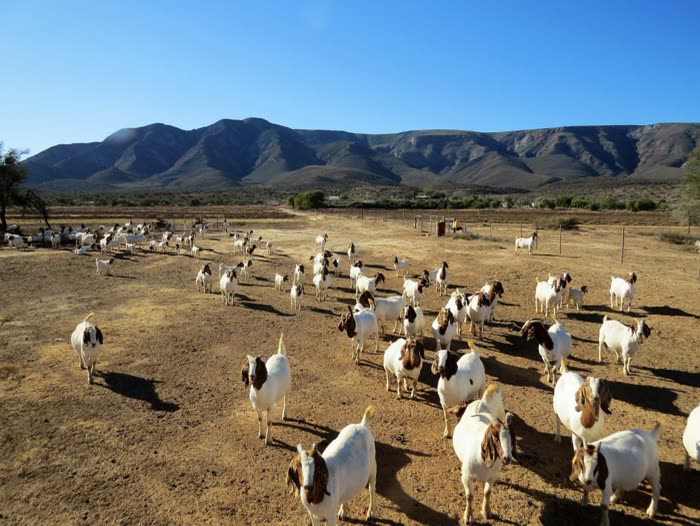
Sources and rights Member stories and the Bulembe Farm protocol are reproduced with the authors' permission as shared with GBAZ members. Press pieces are the association's own summaries and link to the original articles. Breed photographs are from the Boer Goat Breeders' Society gallery; landscape and farm photographs are from Unsplash and Pexels, credited where they appear. Nothing in this journal describes GBAZ as hosted by or in partnership with the Zimbabwe Herd Book: the Herd Book is the statutory registrar, and GBAZ sets the standards and inspects.
Messages from the council
Drawn from the My Goat Story contributions that council members published to the members' group in October 2026. Each message is an extract; the full stories appear in the Member stories section.
From the co-founder
GBAZ belongs to all of us. Its growth is our collective responsibility. (Dr Divine Simbi Ndhlukula, Co-founder; Chairperson 2021 to 2023; Executive Council member)
The Goat Breeders Association of Zimbabwe (GBAZ) was founded in 2018 by two women, Anisha Cader and myself, united by a shared vision for the future of goat breeding in Zimbabwe.
Having invested in registered stud animals, we wanted to ensure that their progeny could be inspected, registered and documented, establishing a reliable pedigree history. What began as a practical need soon grew into a bigger vision: creating a platform where goat breeders could learn from one another, improve their breeding programmes, share knowledge and collectively advance the goat industry in Zimbabwe.
Extract from Dr Divine Simbi Ndhlukula's My Goat Story, shared with GBAZ members in October 2026. Zviko Farms, Featherstone.
From the past chairperson, 2023 to 2026
Membership is not simply about what we receive; it is also about what each of us contributes. (Sifiso Agbetorwoka, Chairperson 2023 to 2026; Executive Council member)
When I joined the Goat Breeders Association of Zimbabwe as an ordinary member in 2021, I joined as a goat farmer eager to learn, grow and contribute to the development of our industry. Little did I know how much the association would become part of my own journey.
In 2022, I was elected to the GBAZ Executive Council, and in October 2023, I was entrusted with the responsibility of serving as Chairperson, a role I held until March 2026. These experiences have given me a deeper appreciation of what a breeders’ association can achieve when people come together with a shared vision.
Extract from Sifiso Agbetorwoka's My Goat Story, shared with GBAZ members in October 2026. Bulembe Farm, Fort Rixon, Matabeleland South.
From the Vice Chairperson (Southern Region)
I joined because I believed in the possibilities. I serve because building those possibilities takes work. (Yvonne Sibanda, Vice Chairperson (Southern Region))
I believe goat farming can change livelihoods when farmers have the knowledge, support and connections to build sustainable businesses. That belief is at the heart of why I joined the Goat Breeders Association of Zimbabwe.
An association brings people with shared interests together to pursue common goals. GBAZ connects goat breeders and farmers to share knowledge, represent their interests and strengthen the industry. There is sometimes an expectation that joining GBAZ means receiving free goats. Our purpose is to help members develop the skills, relationships and opportunities to grow their own goat enterprises. Membership is about participating, contributing and building together.
Extract from Yvonne Sibanda's My Goat Story, shared with GBAZ members in October 2026. Author of Goat Is GOLD, Bulawayo.
From the Vice Chairperson (Northern Region)
Start where you are. Learn continuously. Build relationships. Never allow distance to defeat your vision. (Tinashe Nyangari, Vice Chairperson (Northern Region))
Three years ago, I joined the Goat Breeders Association of Zimbabwe with a vision: to improve my goat herd through strategic crossbreeding, learn from experienced breeders and contribute to the growth of Zimbabwe’s goat industry. My journey began in rural Gwanda, Matabeleland South, where I sourced my foundation breeding does and transported them to Mvuma, Midlands Province, where Nolan Farm is established. Like many farmers, I started with a vision rather than all the answers.
Through the educational webinars organised by GBAZ, I gained valuable knowledge about breeding, nutrition, animal health, herd management and the importance of farmer collaboration. As the project developed, I expanded my breeding herd by sourcing additional does from Harare and introduced Kalahari Red breeding bucks to strengthen our crossbreeding programme. The objective has always been to improve herd quality, productivity, adaptability and long-term commercial value.
Extract from Tinashe Nyangari's My Goat Story, shared with GBAZ members in October 2026. Nolan Farm, Value Stock Agritech, Mvuma, Midlands.
The chairperson's priorities, as reported
Chairperson Ntandoyenkosi Ndhlovu has not published a journal message. The council's priorities for 2026 were reported at the time of the March 2026 election and are summarised here from that report.
The new chairperson set out the council's priorities: commercialising both the indigenous Matebele and Mashona goats and the Boer, Kalahari Red and Savanna; supporting rural grassroots farmers, youth and women; breeding goats that meet African and international standards; registering genetics with the Zimbabwe Herd Book; running farmer trainings in centres such as Chegutu, Masvingo, Gwanda and Gokwe; and opening export markets for meat and breeding stock in the SADC region, East Africa and North Africa. The stated ambition was to help farmers grow from about ten goats to five hundred.
Summary of: Goat Breeders Association of Zimbabwe new leadership elected, Herald (Herald Online), 15 March 2026. Source: https://www.heraldonline.co.zw/watch-goat-breeders-association-of-zimbabwe-new-leadership-elected/
The association's year in review
2026 was the year GBAZ changed its leadership, formed its first breed society, took the Goat Indaba to Masvingo for the first time and went live on TikTok.
March: a new council and a Boer Goat Society
At the annual general meeting in March 2026 the association elected Ntandoyenkosi Ndhlovu, agricultural economist and founder of Gatsheni Boer Goat Stud, as chairperson, succeeding Sifiso Agbetorwoka of Bulembe Farm, who had led the association since October 2023. Yvonne Sibanda was elected Vice Chairperson for the Southern Region and Tinashe Nyangari Vice Chairperson for the Northern Region. Sifiso Agbetorwoka, Naboth Mutambanengwe, Khumbu Makhetho, Mavron Siziba, Providence Shoko and Mbuso Nyathi were named as council members. Naboth Mutambanengwe stepped down as Vice Chairperson North after serving from the 2023 AGM, and Providence Shoko joined the council with the youth portfolio.
In the same month the Boer Goat Society of Zimbabwe was launched as a GBAZ chapter, with Xolisani Mpofu of Eland Zakithi Goat Stud as chairman of its executive council. The society maintains the Boer breed standard, educates breeders, supports registration and drives genetic improvement, working with GBAZ and with the Zimbabwe Herd Book as registrar. Societies for the indigenous breeds are expected to follow.
April: Bulawayo Agricultural Show
At the 115th Bulawayo Agricultural Show, held with the 66th Zimbabwe International Trade Fair, five exhibitors entered the sheep and goat competition under foot-and-mouth movement rules that limited entries. Eland Zakithi Goat Stud took the grand championship and led the Boer, Kalahari Red and Savanna classes; Bulembe Farm won the Saanen doe class; top Boer bucks were valued at more than US$2,800. The chairperson exhibited at ZITF and, with Xolisani Mpofu and Movement Mugabe, facilitated goat training with the Bulawayo Agricultural Society.
September: the TikTok Live Farm Series
The GBAZ TikTok Live Farm Series opened on Sunday 6 September 2026 on the association's channel, @gbaz51, presented by Kenaniah Farms of Marondera. Sessions ran in the morning from 08:00 to 10:00 and in the evening from 17:00 to 18:00 Central Africa Time, covering feeding, vaccination and herd health, breed selection, breeding and kidding, and farm management, with members invited to host sessions from their own farms. The series formed part of the build-up to the Goat Indaba and extended the association's reach to audiences in Ghana, South Africa and Malawi.
In the same month Sifiso Agbetorwoka shared Bulembe Farm's controlled breeding protocol with members, reproduced in full in the Articles section, and the Sunday News published her Talking Farming columns on the economics of goats and on choosing a breed.
October: My Goat Story and the sixth Goat Indaba
Between 16 and 28 October members published their My Goat Story contributions to the members' group and the association's social channels. Nine of them are reproduced in full in this journal.
GBAZ Annual Goat Indaba 2026: 30 to 31 October 2026, Masvingo Agricultural Society showgrounds, Masvingo
The sixth GBAZ Annual Goat Indaba, and the first held in Masvingo, ran from 30 to 31 October 2026 at the Masvingo Agricultural Society showgrounds under the theme "Breeding Resilience: Climate-Smart Goats for a Drought-Ready Zimbabwe". The pitch was simple: learn, connect, trade and experience the full goat value chain, whether you keep five goats or five hundred.
Programme
- Day one, learn and prepare: breeding resilience, drought feeding and nutrition, herd health and kid survival, delivered through partner-led training stations.
- Day two, goat market and experience: the Goat Kitchen and value-addition experience, goat market, exhibitions, buyers, breeders and suppliers.
Training stations
- Nutrition: CMLW Boerdery and National Foods Stockfeeds.
- Breed standards: Xolisani Mpofu, on what to look for when selecting breeding goats.
- Goat artificial insemination: Bindura University of Science Education.
- FAMACHA and herd health.
Confirmed Indaba 2026 partners
Eland Zakithi Goat Stud, Gatsheni Boer Goat Stud, Bulembe Farm, Habstone Kalahari Red, Goat Is GOLD, CMLW Boerdery, National Foods Stockfeeds, StokData Africa and Bindura University of Science Education.
Delegates
US$60 per delegate, which included the 2027 GBAZ membership subscription for new and existing members. Fully paid-up members could take an exhibitor package at US$150 covering stall space, a listing in the event programme and market map, and access to farmers, buyers and stakeholders.
Farmers came from Gweru, Harare, Mutare, Chivi, Bikita, Mhondoro Ngezi, Goromonzi, Bulawayo, Chiredzi, Chitungwiza and Mudzi, joined by visiting South African breeders. The Indaba opened with the Minister of State and the Permanent Secretary in attendance.
Indaba 2026 partners
Nine partners were announced in the order in which they joined: Eland Zakithi Goat Stud; Gatsheni Boer Goat Stud; Bulembe Farm; Habstone Kalahari Red; Goat Is GOLD; CMLW Boerdery of Limpopo and National Foods Stockfeeds, the Nutrition Station partners; StokData Africa; and Bindura University of Science Education, the artificial insemination training partner. The association thanks each of them.
Technical input on the day also came from the Grasslands Research Institute and the Department of Veterinary Services, and Fivet Animal Health presented at the nutrition and health stations. Kobus Lotter, President of the South African Boer Goat Breeders' Association, sent a video message to delegates.
Organising team
On the ground: Ntandoyenkosi Ndhlovu (chairperson), Yvonne Sibanda (Southern Region Vice Chairperson and event coordinator), Xolisani Mpofu, Naboth Mutambanengwe, Khumbu Makhetho, Florence Mbewe of the Zimbabwe Herd Book, Providence Shoko (youth portfolio) and Ntini of Ntini Legacy Goats; online support from Tinashe Nyangari and Sifiso Agbetorwoka.
November: after the Indaba
StokData Africa, unable to deliver its record-keeping presentation at the Indaba, presented online to delegates on 7 November. Indaba delegates who completed the membership form became 2027 members and joined the paid-up members' platform, and the council began organising members into regional clubs and clusters. Members also had two training days run by other organisations to choose from: the Ultimate Goat Mastery Class and Open Day at Valora Agro Estates, Chegutu, on 21 November, with trainers from PUM Netherlands, the GBAZ and Boer Goat Society chairpersons and Sifiso Agbetorwoka; and the Bulawayo Agricultural Society's Goat Expo and Training Roadshow on 28 November.
Looking ahead
The council's stated priorities are registration of members' genetics with the Zimbabwe Herd Book, farmer training in centres such as Chegutu, Masvingo, Gwanda and Gokwe, the development of an auction system for registered goats, breed societies for the indigenous Matebele and Mashona goats, and export markets for meat and breeding stock in the SADC region, East Africa and North Africa. A goat export cluster pilot with ZimTrade in Gwanda District, announced at the 2025 Indaba, pairs ZimTrade's market development with GBAZ's breeder quality control. The seventh Annual Goat Indaba is planned for October 2027.
The breeds
Short profiles of the five breeds for which GBAZ publishes standards. Full profiles, key facts and breed standard highlights are on the GBAZ website.
Boer Goat (meat breed)
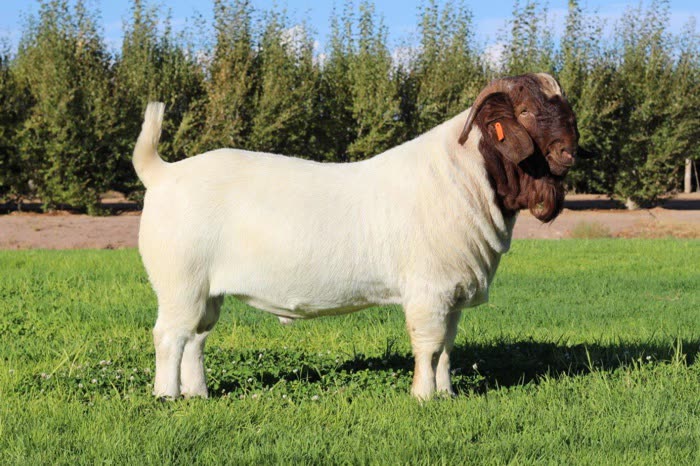
The Boer Goat is a meat breed selected from the lop-eared goats of southern Africa. It was developed in the Eastern Cape region of South Africa during the first half of the twentieth century and has been bred to a written standard since 1959. It is recognised by its white body, red head and ears, Roman nose, broad pendulous ears and loose, pigmented skin. Mature does weigh about 70 to 100 kg and bucks about 110 to 140 kg under good management. Does breed throughout the year, twins are common, and kidding rates of 150 to 200 percent are achieved in well-managed flocks. In Zimbabwe the Boer Goat is used as a pure stud breed and as a sire breed on Matebele and Mashona does to increase weaning weight and carcass size. It performs best where browse and supplementary feed are adequate and where tick and worm control is routine. The Boer Goat Society of Zimbabwe, a GBAZ chapter, maintains the breed standard, arranges inspections and supports registration with the Zimbabwe Herd Book.
Key facts
- History: descended from the indigenous lop-eared goats of southern Africa, with some influence from imported European dairy goats early in the twentieth century. Selected as a meat type in the Eastern Cape from the 1920s and 1930s; the first breed standard and constitution were adopted in 1959. The breed is now recorded in more than 70 countries.
- Mature weight: does 70 to 100 kg; bucks 110 to 140 kg under good management. Performance on unsupplemented veld is usually lower.
- Height: about 78 cm (does) to 94 cm (bucks) at the withers.
- Growth: about 175 g per day on extensive veld and over 200 g per day under intensive feeding. Weaning weights of 25 to 30 kg at 100 days are typical in stud flocks.
Kalahari Red (meat breed)
The Kalahari Red is a solid red-brown meat goat selected from red lop-eared goats of the drier parts of southern Africa during the 1970s to 1990s and recognised as a breed in the late 1990s. Its uniform dark coat and fully pigmented skin protect it from sun, and it was selected under free-ranging conditions in arid savanna. Mature does weigh about 75 kg and bucks about 115 kg. Does are prolific, usually producing twins, and are known for kidding and raising kids on the veld without assistance. The breed is well suited to Natural Regions IV and V of Zimbabwe, including Matabeleland and Masvingo, where its hardiness and camouflage against red soils are valued. Its breed standard is the same as that of the Boer Goat except for colour, which must be an even light to dark brown.
Key facts
- History: developed from red and red-dappled lop-eared indigenous goats collected across the northern Cape, Limpopo and Namibia from the 1970s, with red-pigmented Boer-type animals also contributing. Breeders combined flocks in the late 1990s; DNA testing showed a greater genetic distance from the Boer than between Boer and Savanna; a breeders' club was founded in 1999 and the breed is usually dated to 1998. The name refers to the red sand of the Kalahari. In Zimbabwe the breed was pioneered in the 2010s and is promoted for semi-arid Matabeleland and Masvingo.
- Mature weight: does about 75 kg; bucks about 115 kg. Kids about 30 kg at six months; 100-day weaning weights of about 25 kg (bucks) and 21 kg (does).
- Height: about 76 cm at the withers on average.
- Fertility: prolific, with twins the norm. Doelings can be bred from six to seven months if well grown. Three kiddings in two years are possible. Strong mothering; does kid and raise their young on the veld unassisted. Kidding percentages of 150 to 200 percent are reported for stud flocks.
Savanna (meat breed)
The Savanna is a white meat goat with black skin, hooves and horns. It was developed from the 1950s by mating indigenous lop-eared does to a large white buck and selecting the offspring under harsh, low-input veld conditions, so hardiness, mobility and year-round fertility are part of the standard itself. Mature does weigh about 60 kg and bucks 100 kg or more. Does kid easily, defend their kids and show a long productive life. The breed browses hard, unpalatable vegetation and tolerates heat, cold, ticks and internal parasites, which makes it a useful option for bush-encroached and semi-arid grazing in Zimbabwe. The Savanna's standard emphasises a long neck for browsing, strong black hooves, a sloping rump and complete dark pigmentation; any pink skin is a cull defect.
Key facts
- History: developed from 1955 to 1957 on a farm on the Vaal River in the northern Cape by mating multicoloured lop-eared indigenous does to a large white buck and letting natural selection act on free-ranging flocks in a harsh environment of variable temperature and rainfall. A breeders' society was formed in 1993. The breed has since been exported to the Americas and Australia and is present in Zimbabwe in small numbers; quality breeding stock is harder to find locally than Boer or Kalahari Red.
- Mature weight: does about 60 kg; bucks 100 to 140 kg. Kids at 100 days about 30 kg (bucks) and 25 kg (does).
- Fertility: long breeding season and able to breed year-round; multiple births common; does kid on the veld and defend their kids; long productive life. Kidding rates in stud flocks are in the same 150 to 200 percent band as the Boer.
- Growth: good growth from the veld with a balanced, lean carcass.
Mashona (indigenous)
The Mashona goat is the small, short-eared indigenous goat of northern and eastern Zimbabwe and belongs to the Small East African group of breeds. It is compact, short-haired and comes in white, brown, black and mixed colours. Mature does weigh about 25 to 30 kg and bucks 30 to 40 kg. It matures early, breeds throughout the year and has low kid mortality under smallholder conditions, with good tolerance of internal parasites and tick-borne disease in the wetter regions. The Mashona goat is the most numerous goat in Zimbabwe and the foundation of most smallholder flocks. A written breed standard was published in 2021 by GBAZ with the VALUE project to support conservation, selection of better-framed animals and recognition of Mashona stud breeders.
Key facts
- History: the indigenous goat of the Mashonaland provinces, Midlands, the Zambezi Valley and Manicaland, classified within the Small East African group that extends through Zambia, Malawi, Mozambique and Tanzania. In the south-west it is replaced by the larger Matebele type. Kept mainly by smallholders for meat, cash and ceremonies. The first written breed standard was published by GBAZ with the VALUE project in 2021.
- Mature weight: does 25 to 30 kg (average doe live mass about 25 kg); bucks 30 to 40 kg. Birth weight 1.9 to 2.4 kg.
- Height: about 50 to 57 cm at the withers.
- Fertility: breeds all year; early maturing; good mothering; twinning rates of about 10 to 20 percent under communal management (lower than the Matebele); low kid mortality relative to exotic breeds where disease pressure is high.
Matebele (indigenous)
The Matebele goat (also written Matabele or Ndebele goat) is the large-framed indigenous goat of south-western Zimbabwe. It has broad lop ears, usually horns, a straight face and a short coat in white, black, brown, fawn or mixed colours. Under research-station management mature does reach about 39 kg and bucks 50 to 55 kg; in communal flocks adult does commonly weigh 30 to 35 kg. The breed is prolific for an indigenous type, with about 62 percent twin births recorded at Matopos, and it breeds throughout the year. It tolerates drought, heat, ticks and heartwater, walks long distances to browse and kids without assistance. GBAZ, with the VALUE project, published the first written breed standard for the Matebele goat in 2021 and uses it for inspection, selection and registration so that the breed's size and uniformity can be improved without losing its adaptation.
Key facts
- History: the large indigenous lop-eared goat of Matabeleland North and South, parts of Midlands and Masvingo, and adjacent areas of Botswana and South Africa. It belongs to the same southern African lop-eared family from which the Boer, Kalahari Red and Savanna were later selected, but has never been through a formal selection programme. Phenotypic characterisation was done at Matopos Research Station; the first written breed standard was published by GBAZ with the VALUE project in 2021; the 2025 Goat Indaba was themed on the Matebele and Mashona standards.
- Mature weight: research-station data give males 50 to 55 kg and females about 39 kg; communal-flock does in southern Zimbabwe weigh about 30 kg at mating and 35 kg after kidding; a 2023 communal sample in Lupane averaged only 21 kg, which the authors cite as a reason for structured selection. Extension tables quote 40 to 65 kg bucks and 30 to 45 kg does for well-managed animals.
- Height: about 57 cm at the withers in communal flocks and 65 to 70 cm in well-managed animals.
- Fertility: litter size 1.54 at Matopos (36 percent singles, 62 percent twins, 2 percent triplets); 87.5 percent of does mated kidded; 160 kids born per 100 does mated. Breeds all year; kidding season strongly affects doe weight.
Member stories: My Goat Story
The nine contributions to the My Goat Story campaign of October 2026, reproduced in full and in the authors' own words.
Dr Divine Simbi Ndhlukula
Co-founder; Chairperson 2021 to 2023; Executive Council member. Zviko Farms, Featherstone.
GBAZ belongs to all of us. Its growth is our collective responsibility.
From a shared vision to a growing national movement
The Goat Breeders Association of Zimbabwe (GBAZ) was founded in 2018 by two women, Anisha Cader and myself, united by a shared vision for the future of goat breeding in Zimbabwe.
Having invested in registered stud animals, we wanted to ensure that their progeny could be inspected, registered and documented, establishing a reliable pedigree history. What began as a practical need soon grew into a bigger vision: creating a platform where goat breeders could learn from one another, improve their breeding programmes, share knowledge and collectively advance the goat industry in Zimbabwe.
Anisha Cader became the Association’s first Chairperson, and I had the privilege of serving as the Vice Chairperson with the late Chris Grant and Cakeb Makwara being part of the committee. Our gratitude goes to Mario Beffa who gave guidance on putting our structures in place. From 2021 to 2023 I served as Chairperson. Looking back, I am proud of how far we have come and even more excited about the opportunities that lie ahead.
Celebrating our milestones
- June 2018: officially launched the revived Goat Breeders Association of Zimbabwe with Dr Mpamhanga as Guest of Honour representing the Ministry of Agriculture.
- October 2018: hosted our hugely successful inaugural Goat Indaba at Henderson and Junior Course in Harare, laying the foundation for farmer education and engagement.
- 2022: held our second Goat Indaba and Junior Course at Henderson Research Station in Mazowe.
- 2023: hosted our third Goat Indaba and Junior Course in Bulawayo. We also launched our Facebook page and newsletter. Today our Facebook community has approximately 19,000 followers and continues to grow.
- 2024: hosted our fourth Goat Indaba and Junior Course in Harare.
- 2025: hosted our fifth Goat Indaba and Junior Course in Bulawayo, alongside farm inspections that support the development of quality breeding programmes.
- March 2026: witnessed the launch of the Boer Goat Society of Zimbabwe, an important development in the specialisation of the country’s Boer goat breeding sector.
- October 2026: our sixth Goat Indaba in Masvingo, another opportunity to bring breeders together, share knowledge and inspire the next generation of goat farmers.
These milestones represent more than events on a calendar. They are evidence of what can happen when people come together around a shared purpose and are willing to invest their time, knowledge, resources and energy in building something bigger than themselves.
Leadership, continuity and passing the baton
One of the most important lessons I have learnt through my journey with GBAZ, Securico, Zviko Farms and many other organisations that I lead is that building a lasting institution requires more than a founding vision; it requires responsible leadership, continuity and a willingness to prepare others to lead.
Having run my race as Chairperson in accordance with the Association’s Constitution, I was proud to hand over the leadership in 2023 to another passionate woman, Sifiso Agbetorwoka of Bulembe Farm. In March 2026, Sifiso, in turn, handed over the baton to a passionate young breeder, Ntandoyenkosi Ndhlovu of Gatsheni Boer Goat Stud.
Leadership is not about holding on to a position indefinitely. It is about serving with purpose, strengthening the institution and ensuring that those who come after us have a solid foundation on which to build. I am encouraged to see women continuing to play an important role in GBAZ leadership and young breeders stepping forward to shape the future of our industry.
A call to serve before we seek to benefit
One of my favourite quotes, attributed to John F. Kennedy, is: “Ask not what your country can do for you, ask what you can do for your country.” This principle has guided my involvement in GBAZ from its inception. As members, we must ask ourselves: What can I contribute to GBAZ? How can I help another breeder? What knowledge, experience, resources or opportunities can I share to move our industry forward?
GBAZ is still a young association when compared with established organisations such as the Boer Goat Breeders’ Association founded in 1959. We must therefore be patient with our progress, realistic about our challenges and ambitious about our potential. We are building an institution that we want future generations of goat breeders to inherit with pride.
The future is in our hands
Let us not measure our success only by the number of events we host or the size of our membership. Let us also measure it by the farmers we empower, the breeding standards we improve, the knowledge we share, the young people we inspire and the livelihoods we help transform.
I remain a committed member of the GBAZ Executive Council and dedicated to the continued growth and development of our Association. Together, let us build a stronger GBAZ and a more prosperous future for goat farming in Zimbabwe. The journey continues, and the best chapters of our story are still to be written.
Sifiso Agbetorwoka
Chairperson 2023 to 2026; Executive Council member. Bulembe Farm, Fort Rixon, Matabeleland South.
Membership is not simply about what we receive; it is also about what each of us contributes.
When I joined the Goat Breeders Association of Zimbabwe as an ordinary member in 2021, I joined as a goat farmer eager to learn, grow and contribute to the development of our industry. Little did I know how much the association would become part of my own journey.
In 2022, I was elected to the GBAZ Executive Council, and in October 2023, I was entrusted with the responsibility of serving as Chairperson, a role I held until March 2026. These experiences have given me a deeper appreciation of what a breeders’ association can achieve when people come together with a shared vision.
What being a GBAZ member means to me
- Being part of something bigger than yourself. GBAZ brings goat farmers and breeders together as a national collective with a common interest in a stronger, more sustainable goat industry in Zimbabwe.
- Learning from one another. Sometimes the most meaningful learning comes not from a classroom, but from another farmer who has faced the same challenge and is willing to share what they have learnt.
- Affordable opportunities to learn and grow. Members enjoy significantly discounted fees for training, including the Goat Indaba and the Junior Course.
- Visibility and opportunities for our businesses. Members can advertise at discounted rates, with a Facebook community of approximately 19,000 members and a dedicated association webpage.
- A growing international footprint. Through our TikTok presence and other online platforms, our reach is extending to audiences in Ghana, South Africa and Malawi.
- A pathway into stud breeding. GBAZ provides a pathway towards stud breeding registration through the Zimbabwe Herd Book, as well as membership of the Boer Goat Society of Zimbabwe.
- Showcasing, networking and trading at the Goat Indaba, our flagship event, which brings together farmers, breeders, buyers, suppliers and other stakeholders.
My overall experience of GBAZ has been one of growth, service, learning and connection. An organisation is only as strong as the people who support it. Membership is not simply about what we receive; it is also about what each of us contributes through sharing knowledge, supporting fellow farmers, participating in association activities and helping to open doors for others.
If you are a goat farmer or breeder looking to learn, connect, grow your business and be part of the development of Zimbabwe’s goat industry, I encourage you to explore what GBAZ membership has to offer. Together, we can build stronger breeders, stronger businesses and a brighter future for Zimbabwe’s goat industry.
Learn. Connect. Trade. Experience.
Yvonne Sibanda
Vice Chairperson (Southern Region). Author of Goat Is GOLD, Bulawayo.
I joined because I believed in the possibilities. I serve because building those possibilities takes work.
I believe goat farming can change livelihoods when farmers have the knowledge, support and connections to build sustainable businesses. That belief is at the heart of why I joined the Goat Breeders Association of Zimbabwe.
What is an association?
An association brings people with shared interests together to pursue common goals. GBAZ connects goat breeders and farmers to share knowledge, represent their interests and strengthen the industry. There is sometimes an expectation that joining GBAZ means receiving free goats. Our purpose is to help members develop the skills, relationships and opportunities to grow their own goat enterprises. Membership is about participating, contributing and building together.
What have I gained from GBAZ?
Being part of GBAZ has given me opportunities to learn from farmers, build relationships and better understand the challenges and possibilities within our goat industry. It has also given me a platform to contribute through training, organising events and connecting people. Over the past four years I have helped organise, coordinate and run GBAZ conferences, and across my broader work in the sector I have contributed to training many goat farmers through physical, online and farm-based programmes.
I am the author of Goat Is GOLD: Unlocking the Secrets to a Successful Breeding Business, sharing practical knowledge to help farmers approach goat breeding as a business. I also offer farm-based services to clients, helping them assess their operations, identify management gaps and strengthen their planning, record keeping and business practices.
Why did I accept a seat on the council?
Because I wanted to take responsibility for helping build the association we need. For me, leadership means showing up, doing the work and remaining accountable to the members we serve. My vision is for GBAZ to be an association whose value members experience through practical knowledge, stronger connections and opportunities to grow.
Better Breeding. Smarter Management. Stronger Markets.
Tinashe Nyangari
Vice Chairperson (Northern Region). Nolan Farm, Value Stock Agritech, Mvuma, Midlands.
Start where you are. Learn continuously. Build relationships. Never allow distance to defeat your vision.
Three years ago, I joined the Goat Breeders Association of Zimbabwe with a vision: to improve my goat herd through strategic crossbreeding, learn from experienced breeders and contribute to the growth of Zimbabwe’s goat industry. My journey began in rural Gwanda, Matabeleland South, where I sourced my foundation breeding does and transported them to Mvuma, Midlands Province, where Nolan Farm is established. Like many farmers, I started with a vision rather than all the answers.
Learning, growth and better genetics
Through the educational webinars organised by GBAZ, I gained valuable knowledge about breeding, nutrition, animal health, herd management and the importance of farmer collaboration. As the project developed, I expanded my breeding herd by sourcing additional does from Harare and introduced Kalahari Red breeding bucks to strengthen our crossbreeding programme. The objective has always been to improve herd quality, productivity, adaptability and long-term commercial value.
Farming from the diaspora
I am a remote farmer based in the diaspora. Managing a livestock project from thousands of kilometres away comes with challenges. However, distance should never become an excuse for abandoning a dream. Through dedicated farm workers, teamwork, communication, mentorship, planning and continuous monitoring, we continue to build Nolan Farm, trading as Value Stock Agritech (Private) Limited. We are farming remotely, but our commitment is firmly rooted in Zimbabwe.
From membership to leadership
In 2026, I was honoured to be nominated and accepted a position on the GBAZ Council as Vice Chairperson (Northern Region). I regard this responsibility as an opportunity to serve farmers, promote unity, strengthen collaboration and help build a more organised and commercially sustainable goat industry.
Why farmers should join GBAZ
- Education and skills development through webinars, workshops, farm visits and knowledge-sharing platforms.
- Networking and mentorship with experienced breeders, emerging farmers and industry stakeholders.
- Genetic improvement: breed selection, crossbreeding and responsible breeding practices.
- Market linkages with potential buyers, breeders and livestock suppliers.
- Farmer clubs and regional clusters for local collaboration and collective problem-solving.
- Visibility and promotion of farms, breeding achievements and available livestock.
- Collective representation in discussions about industry development.
I believe that the future of Zimbabwe’s goat industry lies in unity, improved genetics, farmer education, stronger markets and collective action.
Connecting Farmers. Creating Markets. Growing Together.
Xolisani Mpofu
Chairperson, Boer Goat Society of Zimbabwe; founder. Eland Zakithi Goat Stud, Matabeleland North.
Joining GBAZ was not just about membership, it was about belonging to a community building the future of goat farming.
We joined the Goat Breeders Association of Zimbabwe in 2020. At that time, we made a decision as a company to farm the right way: properly, professionally and sustainably. We wanted to affiliate with other serious farmers so we could learn, share knowledge and improve our goat herd.
Since joining the Association, we have truly added value to our goat business. Being part of the national register has given us credibility. We are now recognised as registered breeders, and we benefit from all enquiries about goats. When organisations, companies or individuals want to buy quality goats, they go to the Goat Breeders Association of Zimbabwe for the database, and because we are members, we are part of that opportunity.
What we have benefited most from GBAZ is market access. Through the Association’s credibility and network, we have opened trade across borders and have successfully exported goats to Tanzania, Zambia, Mozambique and Malawi.
Joining GBAZ was not just about membership, it was about belonging to a community that is building the future of goat farming in Zimbabwe and beyond.
Xolisani Mpofu, Founder, Eland Zakithi Goat Stud. Member since 2020.
Providence Shoko
Council member, youth portfolio; founder. Habstone Kalahari Red, Gwanda, Matabeleland South.
No farmer knows everything, but the little we know can add something to another farmer’s basket of knowledge.
My journey, supported by the Goat Breeders Association of Zimbabwe, has taught me patience, discipline and the value of good relationships. I acquired my first bucks with help from Eland Zakithi Stud. Learning from experienced breeders inspired my vision to breed quality animals, improve our crosses and contribute to Zimbabwe’s goat industry.
Winning Champion Buck at the Matabeleland South Agricultural Show in both 2025 and 2026 has been a major highlight. The first award opened doors, including a nomination at SADC level to represent Zimbabwe at the AGRA National Youth Expo in Gaborone, Botswana.
In 2025, I also shared my story publicly for the first time at the Goat Indaba in Bulawayo, through an opportunity facilitated by Madam Sifiso of Bulembe Farm. Her guidance helped me understand GBAZ and encouraged me to participate confidently as a young farmer. In 2026, I was nominated to serve as a GBAZ council member, representing young people in goat farming, a responsibility to listen, contribute and encourage youth participation.
Our farm has gradually invested in purebred animals, including females from Gatsheni Boer Goats. Today, our breeding team includes two Kalahari Red bucks and one Boer buck, while ongoing housing developments support our growth. Through farm visits, Facebook and YouTube, both under Habstone Kalahari Red, we share practical experiences and continue learning from fellow farmers.
I appreciate GBAZ, our mentors and everyone who has supported this journey. My ambition is to build a respected breeding enterprise while helping more young people find their place in goat farming.
Habstone Kalahari Red. Solid as Nature.
Gina Nyandoro
Member since June 2025. Valora Agro Estates, Chegutu, Mashonaland West.
Real, daily field experience differs from managing over the phone.
Joining the Goat Breeders Association of Zimbabwe in June 2025, alongside our membership of the Boer Goat Society, marked a pivotal chapter in our journey at Valora Agro Estates. Hearing about GBAZ opened doors to an extraordinary network of knowledge, mentorship and support.
As a hands-on female farmer living on the farm every single day, I have experienced first-hand how real, daily field experience differs from managing over the phone. GBAZ and the Boer Goat Society have provided invaluable guidance, and in return I bring dedicated passion, practical insights and an unwavering commitment to empowering our farming community.
With the heartfelt support of both societies, I am honoured to host our first Training and Open Day on 21 November in Chegutu, featuring expert trainers from the Netherlands alongside the GBAZ and Boer Goat Society chairpersons and Sifiso of Bulembe Farm. I look forward to growing alongside these associations as we inspire and lead a resilient new wave of female farmers into this space.
Tendai, Kenaniah Farm
Member; creator of StokData Africa. Kenaniah Farm, Marondera, Mashonaland East.
Together, we learn. Together, we grow.
I am a proud goat farmer from Kenaniah Farm in Marondera, Mashonaland East, where we raise Boer goats alongside other livestock. My farming journey has come with challenges, successes and valuable lessons. I have benefited greatly from GBAZ and the knowledge shared by fellow breeders.
My passion for farming inspired me to create StokData Africa, a platform that helps farmers keep accurate records, manage livestock and track profits. At the GBAZ Annual Indaba in Masvingo we shared knowledge on goat record keeping and auditing, along with special StokData offers.
Brian Blessing Simon
New member. Hoof Wealth Enterprise, Mudzi, Mashonaland East.
My ambition is to represent GBAZ in Mudzi District and the whole of Mashonaland East.
I have nine Kalahari goats, one buck and the rest females. This is my fourth year in goat farming. I used to keep crossbreeds, mixing bucks and does, and sometimes experienced inbreeding and mortality. Through learning and passion that stage passed, and I sold all my goats to start my Kalahari breeding stock, which I acquired through Kadram Farm of Mr Crispen Kadiramwando. The buck was acquired from Eland Zakithi through my friend Hungwe.
I am still to learn more from GBAZ and was ready for this year’s Goat Indaba in Masvingo. My ambition is to represent GBAZ in Mudzi District, the whole of Mashonaland East and the provinces surrounding Mudzi.
Articles
The Bulembe Farm protocol shared with members, followed by the GBAZ originals published on the website during 2026.
Controlled breeding at Bulembe Farm: flush feeding and a 44-day buck period
By Sifiso Agbetorwoka. Shared with GBAZ members. 9 September 2026.
Shared by Sifiso Agbetorwoka of Bulembe Farm with GBAZ members on 9 September 2026, in answer to a member's question about synchronising a breeding season. Bulembe Farm does not use hormonal synchronisation. The programme relies on doe preparation, a defined buck period and records.
1. Flush feeding
Feed the does extra before and during the breeding period to improve body condition before the buck goes in. Bulembe Farm runs a 21-day flush-feeding protocol; the detailed feeding schedule was to be shared separately and is not part of these notes.
2. Doe assessment and health
- Assess each doe before breeding and deworm only where necessary, using FAMACHA scores to decide which animals need treatment.
- Give a vitamin injection before breeding.
- Give Multivax P to pregnant does about four to six weeks before kidding so that the kids receive colostral immunity. Consult your veterinarian.
3. Buck management
- Keep the bucks in a separate camp outside the breeding cycle.
- Introduce the buck fitted with a buck marker so that service dates can be recorded.
- Keep the buck with the does for up to 44 days, which covers two oestrous cycles of about 21 days each. Remove the buck earlier if all the does have been served.
4. Records for every doe
- Date first mounted and the buck used.
- Expected and actual kidding date.
- Number of kids born and their birth weights.
- Mothering ability and any kidding problems.
- Weaning date and weaning weight.
5. Kidding to weaning
Target a kidding-to-weaning programme of about 90 to 100 days.
The chain in one line
Doe preparation, nutrition, health, controlled breeding, accurate records, kidding management, milk and nutrition, timely weaning.
FAMACHA scoring for targeted deworming
By GBAZ. Goat Breeders Association of Zimbabwe. 17 November 2026.
FAMACHA is a method for deciding which goats and sheep need treatment for the barber's pole worm (Haemonchus contortus) by checking the colour of the lower inner eyelid. Haemonchus is a blood-sucking worm that lives in the fourth stomach; the more worms an animal carries, the more blood it loses and the paler its mucous membranes become. FAMACHA turns that paleness into a five-point score that tells you whether to treat.
The system was developed in South Africa in the 1990s by veterinarians and parasitologists looking for a way to slow the spread of dewormer resistance. It is now used on goat and sheep farms across Africa, the Americas and Australia, and it was one of the herd-health topics covered at the 2026 GBAZ Goat Indaba in Masvingo.
Why not just deworm everyone?
In most flocks a small number of animals carry most of the worms. Treating every animal on a calendar exposes every worm on the farm to the drug, and the worms that survive breed the next generation. Within a few years the dewormer stops working, and there are few new drug families to fall back on. Treating only the animals that need it leaves a population of untreated worms (called refugia) that dilutes the resistant ones, keeps the drugs effective for longer and saves money.
FAMACHA also shows you which animals cope with worms without help. Over time, those are the does and bucks to keep and breed from.
How to score
- Work in good natural light, not in a dark shed.
- Hold the goat's head and cover the eye with your thumb so that the eyeball rolls back slightly. Then pull the lower eyelid down with the thumb to expose the inner lining (the conjunctiva).
- Compare the colour of the lining with the FAMACHA card immediately, and score both eyes.
- Score 1 is red (healthy), 2 is red-pink, 3 is pink, 4 is pink-white and 5 is white (severely anaemic).
- Record the score against the animal's tag so you can see trends.
The card must be a genuine FAMACHA card, kept out of the sun so that the colours do not fade. Training in its use is strongly advised; GBAZ can direct members to a veterinarian or extension officer who can demonstrate it.
What the score means
- Scores 1 and 2: do not treat.
- Score 3: treat if the animal is a kid, a pregnant or lactating doe, in poor condition, or if the season is high-risk (the rainy months when pasture larvae are abundant). Otherwise monitor and re-check sooner.
- Scores 4 and 5: treat. A score of 5 is an emergency; the animal may also need supportive care.
- If more than about 10 percent of the flock scores 4 or 5, the pasture is heavily contaminated and the whole management plan needs attention, not only the individual animals.
How often
- Every two to three weeks during the rainy season and for two months after it.
- Monthly in the dry season, when Haemonchus pressure is low.
- Always before and after breeding, at kidding and at weaning, when animals are under stress.
Limits
FAMACHA only detects anaemia, so it only works for Haemonchus. It says nothing about other worms, coccidia or liver fluke, which cause scouring and weight loss rather than paleness. Anaemia can also come from ticks, heartwater, liver fluke or poor nutrition. Use FAMACHA alongside body condition scoring, dag (soiling) scores and, where possible, faecal egg counts through a veterinary laboratory.
Fitting it into a breeding programme
Bulembe Farm's controlled breeding protocol, shared with members in 2026, uses FAMACHA to decide which does are dewormed before the buck goes in. That is the right place for it: check the flock, treat only the animals that need it, record the scores, and over the years select for does that stay in the 1 to 2 range.
Birth notifications and pedigree registration: how it works
By GBAZ. Goat Breeders Association of Zimbabwe. 17 November 2026.
Two bodies are involved when a goat is registered in Zimbabwe, and they do different jobs.
- GBAZ is the breed society. It sets the breed standards, trains breeders, judges and inspectors, inspects animals through society-authorised inspectors, and decides who is a stud breeder member. The Boer Goat Society of Zimbabwe, a GBAZ chapter, carries out these functions for the Boer breed.
- The Zimbabwe Herd Book is the statutory registrar. Established by Act of Parliament in 1980 and operating under the Registration of Pedigree Farm Livestock Act, it alone may register pedigrees, publish them in herd books and issue certificates of registration. It records births, parentage and pedigrees for cattle, sheep and goats, runs the annual levy list and issues the registration certificate. It does not carry out inspections.
The steps below follow the Herd Book's published rules, which apply to all species. Goat-specific fees for inspection and registration are confirmed by the GBAZ office.
1. Join as a Stud Breeder
Membership of the Herd Book rests with the breed societies. To register goats a breeder must first be a full member of the relevant society, which for goats means GBAZ membership in the Stud Breeder category (joining fee US$50 and annual subscription US$50 on the current form). Breeders under 18 apply with a parent or guardian.
2. Register a prefix and herd designation letters
Through the society, apply for a stud prefix (the stud name, up to 14 characters) and herd designation letters (HDL). A prescribed registration fee applies. The prefix becomes part of every registered animal's name.
3. Identify every animal
Every animal must carry two means of identification: a tattoo, tag or brand made up of the herd letters, the year and a sequence number (for example ALP 1/90), plus a second mark according to the society's rules. The GBAZ Animal Register template uses the same tag format so that your own records line up with the Herd Book's.
4. Keep the herd list current
The Herd Book draws up a herd list from existing certificates and birth notifications and circulates it each January as a levy list. It must be checked and returned by the end of February; a list that is not returned leads to automatic in-activation of the herd.
5. Notify births within 60 days
Every kid intended for registration must be notified within 60 days of birth, on the manual form or through HerdMASTER. From January 2026 late notifications attract fees of US$2 (61 to 180 days), US$5 (181 to 365 days) and US$10 plus society approval after a year. A service certificate is needed if the dam was bought in kid, and a sire-loan certificate if the sire was borrowed.
6. Submit DNA samples
DNA samples are required with birth notifications and are the prerequisite for upgrading an animal into the Herd Book register.
7. Inspection by the society
The Herd Book does not inspect. GBAZ inspectors, authorised by the society, inspect the animals against the breed standard, sign the inspection sheets and return them to the Herd Book. Animals over 12 months that are still in the kid register need an inspection return before they can be registered. An application for registration must be accompanied by a certificate that the animal passed inspection.
8. Registration certificate
The Herd Book issues the registration certificate with the prefix and name, number and parentage. It also handles transfers of ownership (notify within 30 days), re-instatements, duplicate certificates, alterations, AI-sire and embryo registrations, imported animals (a 14-ancestor pedigree and a fee of US$20 per imported animal from January 2026) and the appendix or upgrading schemes run by the societies.
Levies
From January 2026 the Herd Book's annual herd levy is US$240 and the per-animal levy for small stock is US$2. Levy lists go out in January and are payable by the end of March; quarterly instalments can be requested.
Where to start
Join GBAZ as a Stud Breeder, record your animals in the Animal Register, and contact the office about prefix registration and the next inspection. The office will confirm the goat-specific inspection and registration fees.
Membership benefits
By GBAZ. Goat Breeders Association of Zimbabwe. 17 November 2026.
GBAZ membership is open to goat farmers, breeders and organisations in two categories: Ordinary and Associate Member (joining fee US$20, annual subscription US$20) and Stud Breeder (joining fee US$50, annual subscription US$50). All applications are subject to approval. The association publishes ten benefits of membership.
- Knowledge sharing and networking. Members meet and learn from other breeders at the Indaba, open days, farm visits and online, and share protocols on feeding, breeding and herd health.
- Access to resources. Members gain access to the association's resources and to the pedigree recording services of the Zimbabwe Herd Book, the statutory registrar.
- Promotion and marketing. The Annual Goat Indaba, the newsletter, member open days and exhibitions give members a platform to show and sell their animals.
- Advocacy and representation. The association represents goat breeders' interests to government and industry, and has lobbied with other livestock associations on issues such as taxes on animal sales.
- Educational programmes and training. Members pay discounted fees for training, including the Goat Indaba and the Junior Course run at the Indaba by an accredited course provider.
- Breed improvement and recognition. Breed standards, inspections and the pathway to stud registration with the Zimbabwe Herd Book allow members' animals to be recognised and sold as registered stock.
- Industry updates. Members receive news on markets, regulations, events and research through the newsletter, the members' group and the association's social channels.
- Legal and regulatory guidance. The association works closely with the Department of Veterinary Services on movement permits, disease control and other requirements.
- Support and collaboration. Members join farmer clubs and regional clusters for local problem-solving and collective marketing.
- Access to funding and grants. The association works with financial institutions to open funding opportunities for members.
Members also receive discounts on newsletter advertising and on exhibition and entry fees for trainings and the Indaba. In 2026, fully paid-up members could take the Indaba exhibitor package at US$150, and the 2026 delegate fee of US$60 included the 2027 membership subscription.
Membership is not a route to free goats. Its purpose is to help members develop the skills, relationships and opportunities to grow their own goat enterprises.
In the press: attributed summaries
Original GBAZ summaries of press coverage during 2026. Nothing is quoted; each summary names its source so that readers can find the full article.
Zimbabwe's goat industry evolves with new standards
Clemence Manyukwe, Farmer's Weekly, 9 February 2026.
Clemence Manyukwe's feature in Farmer's Weekly profiles Sifiso Agbetorwoka of Bulembe Farm, then GBAZ chairperson, and uses her story to explain how the association has developed since 2018.
GBAZ was founded in 2018 by Dr Divine Simbi Ndhlukula and Anisha Cader, farmers who had imported stud-registered goats and found no local body able to set breed standards, inspect animals or support registration. After consulting the Zimbabwe Herd Book they set up GBAZ as an umbrella body for all goat breeds, starting with three registered breeders, with the intention that each breed would eventually have its own society for standards, inspections and breeder development. The article notes that the COVID-19 pandemic severely disrupted activities after the Boer Goat Society was launched.
The feature reports that in 2025 eleven breeders were formally inspected by an inspector from the South African Boer Goat Breeders' Association, which made them eligible to register their goats with the Zimbabwe Herd Book. A senior breeders' course was planned for Limpopo in the first week of March 2026, and the association intended to develop an auction system modelled on the Dorper sheep breeders' approach.
Agbetorwoka, a former nurse in the United Kingdom who returned to farm at Fort Rixon, is presented as an example of the commercial, standards-based goat farming GBAZ is trying to build.
Source: https://www.farmersweekly.co.za/animals/sheep-and-goats/zimbabwes-goat-industry-evolves-with-new-standards/
Goat Breeders Association of Zimbabwe new leadership elected
Judith Phiri, Herald (Herald Online), 15 March 2026.
Herald Online reported on the GBAZ annual general meeting of March 2026 at which a new council was elected. Ntandoyenkosi Ndhlovu, an agricultural economist and founder of Gatsheni Boer Goat Stud, became chairperson, succeeding Sifiso Agbetorwoka. Yvonne Sibanda was elected Vice Chairperson for the Southern Region and Tinashe Nyangari Vice Chairperson for the Northern Region.
Six council members were named: Sifiso Agbetorwoka, Naboth Mutambanengwe, Khumbu Makhetho, Mavron Siziba, Providence Shoko and Mbuso Nyathi. Gina Gowera of Chegutu was mentioned as a committee member.
The new chairperson set out the council's priorities: commercialising both the indigenous Matebele and Mashona goats and the Boer, Kalahari Red and Savanna; supporting rural grassroots farmers, youth and women; breeding goats that meet African and international standards; registering genetics with the Zimbabwe Herd Book; running farmer trainings in centres such as Chegutu, Masvingo, Gwanda and Gokwe; and opening export markets for meat and breeding stock in the SADC region, East Africa and North Africa. The stated ambition was to help farmers grow from about ten goats to five hundred.
The article is the public record of the current council, and the names and roles on this site follow it.
Source: https://www.heraldonline.co.zw/watch-goat-breeders-association-of-zimbabwe-new-leadership-elected/
Eland Zakithi Stud dominates Bulawayo Agricultural Show 2026
Sunday News (Herald Online), 24 April 2026.
The Sunday News reported on the sheep and goat competition at the 115th Bulawayo Agricultural Show, held in April 2026 alongside the 66th Zimbabwe International Trade Fair.
Five exhibitors entered: Eland Zakithi Goat Stud, Matopos Research Institute, Bulembe Farm, Esigodini Agricultural College and N. Sibindi. Foot-and-mouth disease movement rules limited the number of entries. The competition was sponsored by Capital Foods, National Foods, Meadows and SAFECO.
Eland Zakithi Goat Stud, founded by Boer Goat Society of Zimbabwe chairman Xolisani Mpofu, took the grand championship and led the Boer, Kalahari Red and Savanna classes. Bulembe Farm won the Saanen doe class. The article records that the top Boer bucks on show were valued at more than US$2,800 each, a useful benchmark for members pricing registered breeding stock.
For GBAZ the show is one of the main annual windows for registered breeders: a chance to be judged against the breed standard, to meet buyers, and to show the public what inspected, recorded goats look like. The 2027 show will again run with ZITF in Bulawayo from 26 April to 1 May.
Source: https://www.heraldonline.co.zw/watch-eland-zakithi-stud-dominates-bulawayo-agricultural-show-2026-sheep-and-goats-competition/
Why Zimbabwean farmers should consider goats
Sifiso Agbetorwoka, Sunday News (Herald Online), 2 August 2026.
In this Talking Farming column, Sifiso Agbetorwoka makes the business case for goats to Zimbabwean farmers who still regard them as the poor man's cow. Her argument is that a goat enterprise, run with records and a plan, is a smart investment rather than a fallback.
The column works through the economics. Goats need less land and capital than cattle, reproduce faster, and can be sold in small numbers when cash is needed. Feed is identified as the largest cost, at about 60 to 70 percent of the total, which is why nutrition planning, browse management and drought feeding decide whether a herd makes money.
She also sets out the value-addition opportunities beyond live sales: goat meat and meat products, milk, skins and manure, each of which can turn a subsistence flock into a business with several income lines.
The message to prospective members is practical. Start with the right breed for your area, keep records from the first animal, budget for feed, and treat the herd as an enterprise with targets for kidding rate, weaning weight and offtake.
Source: https://www.heraldonline.co.zw/why-zimbabwean-farmers-should-consider-goats-from-the-poor-mans-cow-to-a-smart-business-investment/
Choosing the right goat breed: there is no one-size-fits-all goat
Sifiso Agbetorwoka, Sunday News (Herald Online), 30 August 2026.
In this Talking Farming column for the Sunday News, GBAZ council member Sifiso Agbetorwoka argues that there is no single best goat breed for Zimbabwe. The right choice depends on the farmer's region, feed resources, management capacity and market.
The column takes the main breeds one at a time. The Boer is described as the best-known commercial meat goat in the country, but one that needs good nutrition and health management to deliver its growth. The Kalahari Red is presented as the meat breed most suited to semi-arid areas, where its pigmentation and hardiness count. The Savanna is hardy and suited to extensive systems, although quality breeding stock is harder to find than Boer or Kalahari Red.
On the indigenous side, the Matebele is noted for hardiness, disease and tick resistance, good mothering and a high conception rate, and for crossing well with the Boer. The Mashona is very hardy and prolific, breeds year-round and needs little supplementary feed, but its small frame can lead to difficult births when it is crossed with large breeds, so sire selection matters.
For dairy, the Saanen is one of the world's best-known milk breeds, but its light coat is less suited to extreme heat without shade. The Anglo-Nubian is mentioned as a dual-purpose, heat-tolerant option.
The practical message for members is to match the breed to the farm rather than the other way round, and to buy breeding stock from inspected, registered breeders.
Source: https://www.heraldonline.co.zw/choosing-the-right-goat-breed-there-is-no-one-size-fits-all-goat/
Goat Indaba to spotlight climate-smart breeding
Judith Phiri, Chronicle (Herald Online), 28 October 2026.
Writing in the Chronicle two days before the event, Judith Phiri previewed the 2026 GBAZ Annual Goat Indaba, held on 30 and 31 October 2026 at the Masvingo Agricultural Society showgrounds under the theme of breeding resilience and climate-smart goats for a drought-ready Zimbabwe.
The article notes that this was the first Goat Indaba held outside Harare and Bulawayo, and that the programme was built around partner-led training stations rather than lecture sessions alone. Vice Chairperson (Southern Region) Yvonne Sibanda and Boer Goat Society of Zimbabwe chairman Xolisani Mpofu were quoted on the aims of the event, and breeders from South Africa were expected to attend.
The piece also explains the Boer Goat Society of Zimbabwe, formed in March 2026 as a GBAZ chapter with Xolisani Mpofu as executive council chairman. Its purpose is to maintain Boer breed standards, educate breeders, support registration and drive genetic improvement, working with GBAZ and with the Zimbabwe Herd Book as the registrar.
For members, the preview is a useful record of how the Indaba was framed before it happened: a two-day, hands-on event aimed at farmers of any herd size who want to breed goats that cope with drought.
Source: https://www.heraldonline.co.zw/goat-indaba-to-spotlight-climate-smart-breeding/
Climate-smart breeding takes centre stage at 2026 goat indaba
Chronicle (Herald Online), 29 October 2026.
The Chronicle's report from the opening day of the 2026 GBAZ Annual Goat Indaba in Masvingo describes how the programme was organised. The morning was given to nutrition and herd health stations, and the afternoon to four breeding and management stations of about fifty minutes each, so that delegates rotated through practical sessions rather than sitting through a single plenary.
Technical input came from Bindura University of Science Education, the Grasslands Research Institute and the Department of Veterinary Services. CMLW Boerdery, a Kalahari Red stud and feed business from Modimolle in Limpopo, took part as a nutrition station partner, alongside National Foods Stockfeeds.
The theme, breeding resilience through climate-smart goats for a drought-ready Zimbabwe, ran through every station: which breeds and crosses hold condition in a dry year, how to feed through a drought, how to keep kids alive, and how to select breeding stock against a standard.
The report confirms the facts GBAZ has published about the event: the dates, the venue at the Masvingo Agricultural Society, the station format and the partners who delivered the training.
Source: https://www.heraldonline.co.zw/climate-smart-breeding-takes-centre-stage-at-2026-goat-indaba-3/
GBAZ Newsletter archive
The association's newsletter, launched in 2023, is published online. Issues to date:
- GBAZ Newsletter, Issue 1: https://anyflip.com/ifnmz/humt/
- GBAZ Newsletter, Issue 2: https://anyflip.com/csliq/hxas/
- GBAZ Newsletter, Issue 3: https://anyflip.com/csliq/qvth/
- GBAZ Newsletter, Issue 4: https://anyflip.com/csliq/ewlq/
- GBAZ Newsletter, Issue 5: https://anyflip.com/csliq/mnua/
- GBAZ Newsletter, Issue 6: https://anyflip.com/csliq/fotp/
- GBAZ Newsletter, Issue 7: https://anyflip.com/csliq/vewk/
The council, 2026
Elected at the annual general meeting in March 2026. The chair of the Boer Goat Society of Zimbabwe sits with the council.
- Ntandoyenkosi Ndhlovu, Chairperson. Gatsheni Boer Goat Stud. Qualified small-stock judge.
- Yvonne Sibanda, Vice Chairperson (Southern Region). Event coordinator. Author of Goat Is GOLD.
- Tinashe Nyangari, Vice Chairperson (Northern Region). Nolan Farm, Mvuma. Leads the membership drive.
- Sifiso Agbetorwoka, Council member. Past chairperson, 2023 to 2026. Bulembe Farm, Fort Rixon.
- Naboth Mutambanengwe, Council member. Past Vice Chairperson (Northern Region). Liaison with the Department of Veterinary Services.
- Khumbu Makhetho, Council member. Boer goat breeder.
- Mavron Siziba, Council member. Elected March 2026.
- Providence Shoko, Council member, youth. Habstone Kalahari Red, Gwanda.
- Mbuso Nyathi, Council member. Elected March 2026.
- Xolisani Mpofu, Chair, Boer Goat Society. Eland Zakithi Goat Stud. Qualified small-stock judge.
Dr Divine Simbi Ndhlukula, co-founder and chairperson from 2021 to 2023, remains a member of the executive council. Xolisani Mpofu served as Vice Chairperson (Southern Region) from 2024 to 2025 before leading the Boer Goat Society of Zimbabwe.
Partners and service providers directory
Studs, breeder farms, Indaba partners, service providers, institutions and event organisers listed on the GBAZ website. A listing is not an endorsement; relationships are stated only where confirmed.
Studs and breeder farms
| Name | Type | Website |
|---|---|---|
| Eland Zakithi Goat Stud | Stud or breeder, Indaba 2026 partner | |
| Gatsheni Boer Goat Stud | Stud or breeder, Indaba 2026 partner | gatshenigoatstud.co.za |
| Bulembe Farm | Stud or breeder, Indaba 2026 partner | bulembefarm.co.zw |
| Habstone Kalahari Red | Stud or breeder, Indaba 2026 partner | |
| Kenaniah Farm | Stud or breeder | |
| Nolan Farm | Stud or breeder | |
| Valora Agro Estates | Stud or breeder | |
| Zviko Farms | Stud or breeder | www.zvikofarms.co.zw |
| Kadram Boer Goat Farm | Stud or breeder | |
| Ntini Legacy Goats | Stud or breeder | |
| Hoof Wealth Enterprise | Stud or breeder | |
| Juprimah Estate | Stud or breeder |
Indaba 2026 partners (other than studs)
| Name | Type | Website |
|---|---|---|
| Goat Is GOLD | Partner, Indaba 2026 partner | yvassociatesbusiness.co.zw/goat-is-gold.php |
| CMLW Boerdery | Partner, Indaba 2026 partner | |
| National Foods Stockfeeds | Service provider, Indaba 2026 partner | nfstockfeeds.co.zw |
| StokData Africa | Service provider, Indaba 2026 partner | stokdata.africa |
| Bindura University of Science Education | Institution, Indaba 2026 partner | www.buse.ac.zw |
Service providers
| Name | Type | Website |
|---|---|---|
| Profeeds | Service provider, Indaba 2025 main sponsor | www.profeeds.co.zw |
| Fivet Animal Health | Service provider | www.fivetanimalhealth.com |
| Capital Foods | Service provider | www.capitalfoods.co.zw |
| Chemplex Animal and Public Health | Service provider | www.chemplex.co.zw/caph |
| Seed Co Zimbabwe | Service provider | www.seedcogroup.com/zw |
| Hyperfeeds Animal Nutrition | Service provider | www.hyperfeeds.co.zw |
| FeedMix | Service provider | www.feedmix.co.zw |
| Agri-Milling | Service provider | www.agrimilling.co.zw |
| Valley Seeds | Service provider | www.valleyseeds.co.zw |
| Kurima Centre | Service provider | www.kurimacentre.co.zw |
| Agrirocket Engineering | Service provider | www.agrirocket.co.zw |
| Coopers Zimbabwe | Service provider | |
| Farm and City Centre | Service provider | |
| Masvingo Chicks | Service provider | |
| Nutrimaster | Service provider |
Institutions
| Name | Type | Website |
|---|---|---|
| Land Tenure Programme | Institution |
Event organisers
| Name | Type | Website |
|---|---|---|
| ZITF Company | Event organiser | zitf.co.zw |
| Zimbabwe Agricultural Society | Event organiser | www.zas.co.zw |
| Bulawayo Agricultural Society | Event organiser | bas.co.zw |
| ADMA Agri Show | Event organiser | agrishow.co.zw |
| Masvingo Provincial Show Society | Event organiser |
Calendar 2027
Dates known at the time of publication. Where an organiser has not announced dates they are shown as to be announced; confirm with the organiser before travelling.
| Date | Event | Venue | Organiser |
|---|---|---|---|
| 17 to 19 March 2027 | Livestock Conference 2027 | ZICES, Bulawayo | ZITF Company |
| 26 April to 1 May 2027 | ZITF 2027, Zimbabwe International Trade Fair | ZITF grounds, Bulawayo | ZITF Company |
| June 2027, dates to be announced | ADMA Agri Show 2027 | ART Farm, Pomona, Harare | Agricultural Dealers and Manufacturers Association |
| August 2027, dates to be announced | Zimbabwe Agricultural Show 2027 | Harare Showgrounds, Exhibition Park, Harare | Zimbabwe Agricultural Society |
| October 2027, dates to be announced | GBAZ Annual Goat Indaba 2027 (GBAZ) | To be announced | Goat Breeders Association of Zimbabwe |
Remaining dates in 2026
| Date | Event | Venue | Organiser |
|---|---|---|---|
| Saturday 21 November 2026 | Ultimate Goat Mastery Class and Open Day | Valora Agro Estates, Chegutu | Valora Agro Estates |
| Saturday 28 November 2026, 08:00 to 17:00 | Goat Expo and Training Roadshow | The Pavilion, Bulawayo Agricultural Society, ZITF grounds, Bulawayo | Bulawayo Agricultural Society |
| Date to be confirmed by BAS (after the 28 Nov roadshow) | Goat Farming for Beginners: Markets and Value Addition | The Pavilion, Bulawayo Agricultural Society, ZITF grounds, Bulawayo | Bulawayo Agricultural Society with Bulembe Farm |
GBAZ members who want to exhibit at the agricultural shows, or to enter the sheep and goat classes, should contact the office early in the year. The annual herd list from the Zimbabwe Herd Book must be returned by the end of February and levies paid by the end of March.
How to join GBAZ
Membership is open to goat farmers, breeders, students, supporters and organisations in Zimbabwe and abroad. All applications are subject to approval.
| Category | Who it is for | Joining fee | Annual subscription |
|---|---|---|---|
| Ordinary and Associate Member | Goat farmers and supporters of the industry | US$20 | US$20 |
| Stud Breeder | Breeders registering pedigree animals with the Zimbabwe Herd Book | US$50 | US$50 |
Fees are those on the current membership form; the office confirms the schedule before payment. In 2026 the Indaba delegate fee of US$60 included the 2027 subscription.
- Complete the membership application form Download it from the GBAZ website under Resources, or ask the office. Choose the category and give the name under which you want to be recorded.
- Pay the joining fee and subscription By bank transfer or in cash at the office. Send proof of payment to the office WhatsApp line for receipting.
- Approval and welcome The council approves the application. You receive a membership number, the annual membership certificate and an invitation to the paid-up members' group.
- Take part Training, the Goat Indaba, member discounts, the directory and, for Stud Breeders, the registration pathway described in the GBAZ Stud Registration Guide.
What members receive
- Knowledge sharing and networking. Members meet and learn from other breeders at the Indaba, open days, farm visits and online, and share protocols on feeding, breeding and herd health.
- Access to resources. Members gain access to the association's resources and to the pedigree recording services of the Zimbabwe Herd Book, the statutory registrar.
- Promotion and marketing. The Annual Goat Indaba, the newsletter, member open days and exhibitions give members a platform to show and sell their animals.
- Advocacy and representation. The association represents goat breeders' interests to government and industry, and has lobbied with other livestock associations on issues such as taxes on animal sales.
- Educational programmes and training. Members pay discounted fees for training, including the Goat Indaba and the Junior Course run at the Indaba by an accredited course provider.
- Breed improvement and recognition. Breed standards, inspections and the pathway to stud registration with the Zimbabwe Herd Book allow members' animals to be recognised and sold as registered stock.
- Industry updates. Members receive news on markets, regulations, events and research through the newsletter, the members' group and the association's social channels.
- Legal and regulatory guidance. The association works closely with the Department of Veterinary Services on movement permits, disease control and other requirements.
- Support and collaboration. Members join farmer clubs and regional clusters for local problem-solving and collective marketing.
- Access to funding and grants. The association works with financial institutions to open funding opportunities for members.
Contacts
| Item | Detail |
|---|---|
| WhatsApp support | +263 77 196 7856 |
| Office | +263 77 412 2660 (WhatsApp; proof of payment and registrar queries) |
| Indaba enquiries | +263 78 503 5693; gbazindaba2026@gmail.com |
| zhb-sec@lit.co.zw | |
| Office address | Livestock Centre, Exhibition Park, Samora Machel Avenue West, Belvedere, Harare; P O Box BE 209, Belvedere, Harare |
| Goat Breeders Association of Zimbabwe | |
| TikTok | @gbaz51 |
GBAZ sets the breed standards and inspects. The Zimbabwe Herd Book is the statutory registrar under the Registration of Pedigree Farm Livestock Act [Chapter 19:11] and issues pedigree registration certificates. Published by the Goat Breeders Association of Zimbabwe, November 2026.
Published by the Goat Breeders Association of Zimbabwe.